

Termite prevention protects your home long term by stopping termites before they cause hidden and costly structural damage.
Termites are one of the most destructive pests a homeowner can face. Unlike ants or roaches, termites do not search for food in plain sight. They stay hidden inside walls, under floors, and beneath foundations. This makes them difficult to detect without professional help.
Many homeowners only discover termites after damage has already occurred. By that point, repairs can be expensive and disruptive. Termite prevention focuses on stopping this problem before it starts.
This guide explains how termite prevention works, why it is critical for long-term home protection, and how homeowners can take smart steps to reduce risk year after year.
Why Termite Prevention Matters for Long-Term Home Protection
Termites feed on cellulose, which is found in wood and many building materials. Over time, this feeding weakens key structural components of a home.
According to the Pest World, termites cause more than 5 billion dollars in property damage each year in the United States, and most homeowner insurance policies do not cover this type of damage. That financial burden often falls entirely on the homeowner.
Without proper termite prevention, damage can:
- Compromise floor joists and wall framing
- Cause doors and windows to stick
- Lead to sagging floors or ceilings
- Reduce a home’s resale value
Preventing termites early protects the structure of the home and avoids long-term repair costs that often exceed the price of prevention.
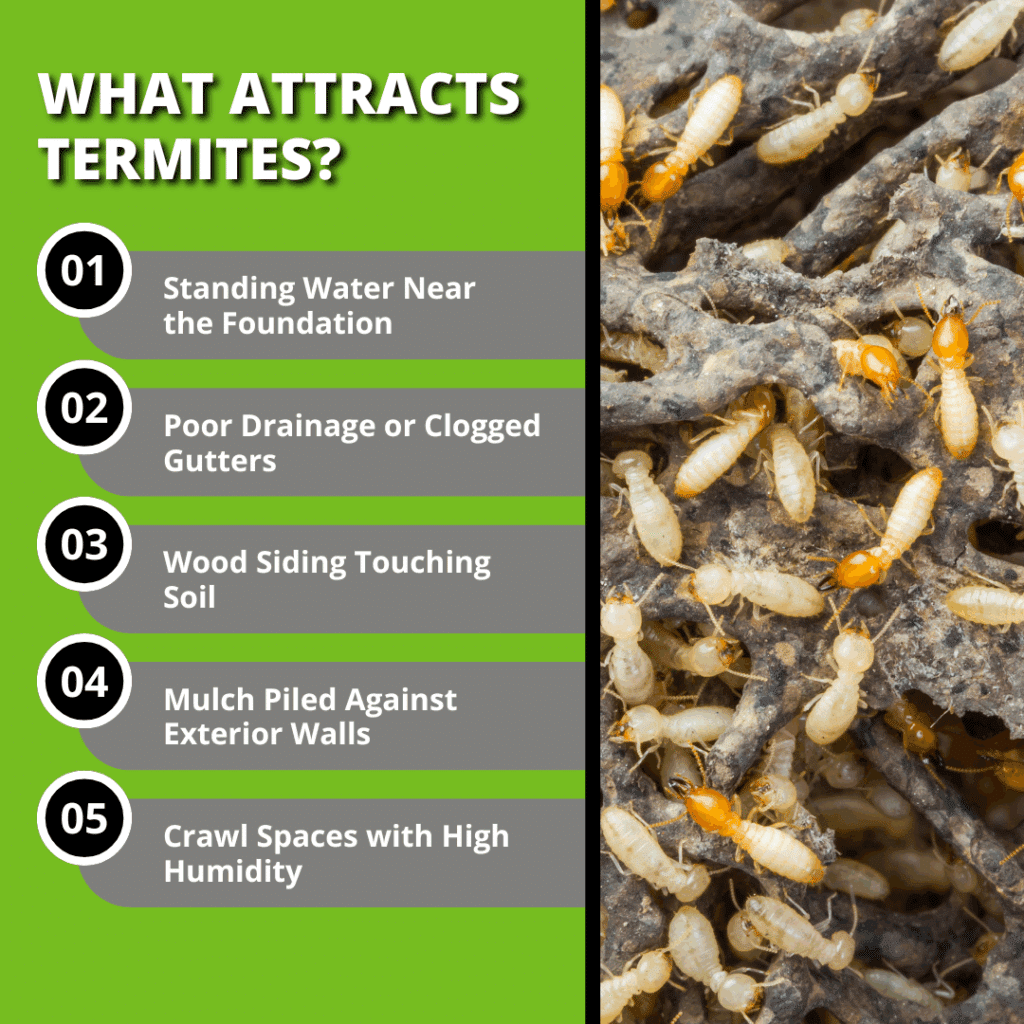
What Attracts Termites to Homes in the South
Homes in the South face higher termite pressure due to warm temperatures, humidity, and soil conditions that support termite colonies.
Subterranean termites, the most common type in this region, live underground and build tunnels to reach food sources. They are attracted to environments that provide moisture and easy access to wood.
Common attractants include:
- Standing water near the foundation
- Poor drainage or clogged gutters
- Wood siding or trim touching soil
- Mulch piled against exterior walls
- Crawl spaces with high humidity
Even well-built homes can attract termites if these conditions are present. This is why termite prevention is important even when there are no visible signs of pests.
Common Termite Prevention Mistakes Homeowners Make
Many homeowners assume they are protected when they are not. These assumptions often lead to delayed treatment and higher repair costs.
One common mistake is believing a past treatment lasts forever. Termite barriers can break down over time due to soil movement, landscaping changes, or weather events.
Other frequent mistakes include:
- Skipping annual termite inspections
- Using store-bought sprays or baits
- Ignoring moisture issues around the home
- Waiting until damage is visible
Termite prevention works best when it is consistent and professionally monitored.
Proven Termite Prevention Strategies That Actually Work
Effective termite prevention combines professional treatment methods with ongoing monitoring and homeowner support.
Professional strategies include:
- Soil barrier treatments that create a protective zone around the foundation
- Baiting and monitoring systems that detect and eliminate colonies early
- Preventive treatments for new construction or additions
These systems are designed to stop termites before they enter the structure. They are applied strategically based on the home’s layout and risk factors.
Homeowner actions, such as moisture control and proper landscaping, support these treatments and improve long-term effectiveness.
How Professional Termite Prevention Protects Your Home Long Term
Professional termite prevention goes beyond surface solutions. Licensed technicians are trained to identify hidden risks that homeowners often overlook.
Professional services provide:
- Thorough inspections of foundations, crawl spaces, and exterior walls
- Targeted treatments based on termite behavior
- Monitoring systems that alert technicians to activity
- Ongoing service plans that adapt as conditions change
Unlike DIY products, professional prevention focuses on long-term protection and early detection, not short-term results.
How Termite Prevention Plans Are Customized for Each Home
Every home has different termite risks. Factors such as soil type, foundation design, moisture levels, and nearby vegetation all affect prevention needs.
During an assessment, professionals evaluate:
- Foundation style and condition
- Areas where wood contacts soil
- Drainage patterns and moisture sources
- History of termite activity
- Surrounding structures and landscaping
This information helps create a customized termite prevention plan that provides better coverage and more reliable long-term protection.
How Often Should Termite Prevention Be Reviewed or Updated?
Termite prevention should be reviewed regularly to ensure it remains effective.
Most professionals recommend:
- Annual termite inspections
- Routine monitoring of bait systems
- Re-evaluation after flooding or major storms
- Updates after renovations or landscaping changes
Homes in high-risk areas may require more frequent monitoring. Regular reviews help catch problems early and maintain continuous protection.
The Long-Term Cost Benefits of Termite Prevention
Preventive services are far less expensive than repairing termite damage.
Industry data shows termite repairs often range from $1,000 to more than $10,000, depending on how long the infestation went undetected. Structural repairs can also increase insurance challenges and delay real estate transactions.
| Cost Comparison | Typical Impact |
| Annual termite prevention | Predictable and manageable |
| Termite inspection | Often low cost or included |
| Structural termite repairs | High and unexpected |
| Home sale delays | Stressful and costly |
Termite prevention protects both your home and your financial investment.
Termite Prevention Tips Homeowners Can Start Today
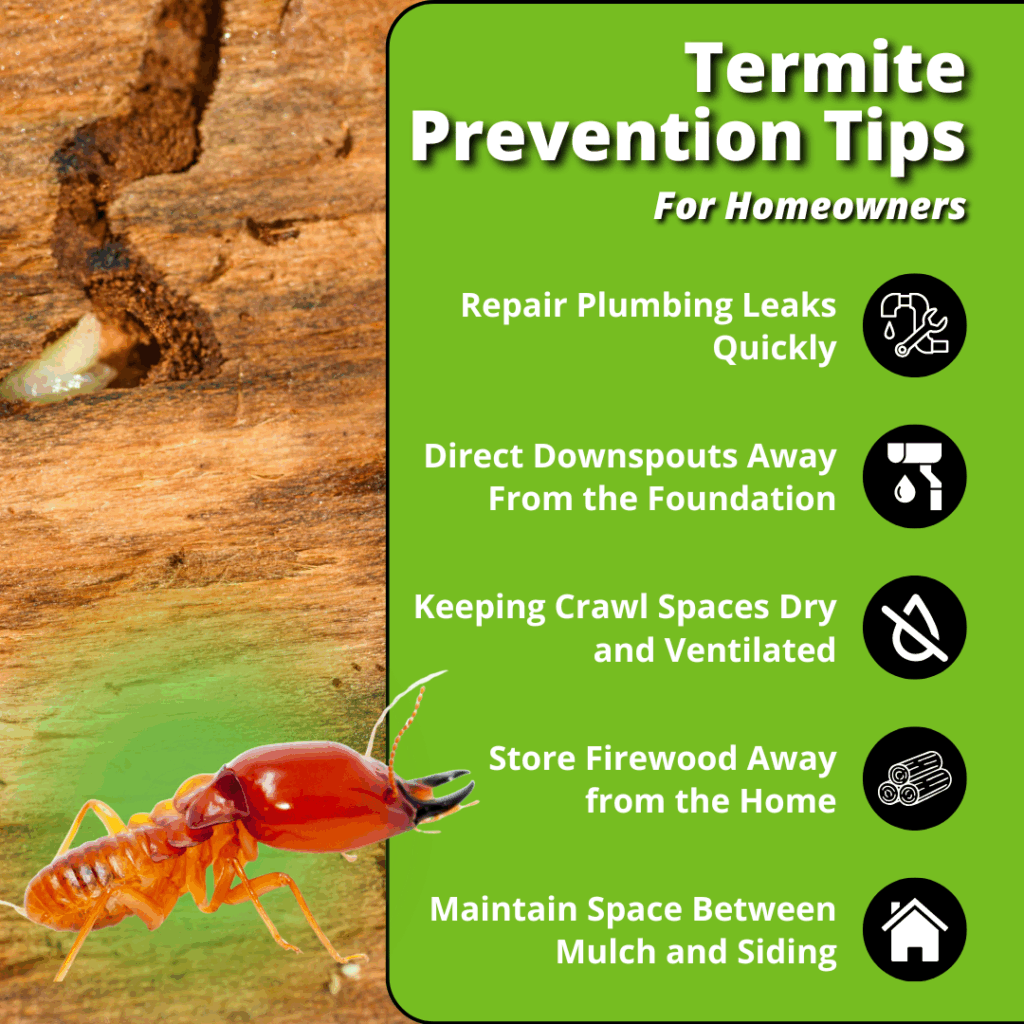
Homeowners can reduce termite risk between professional visits by making simple changes.
Helpful steps include:
- Repairing plumbing leaks quickly
- Directing downspouts away from the foundation
- Keeping crawl spaces dry and ventilated
- Storing firewood away from the home
- Maintaining space between mulch and siding
These steps do not replace professional prevention, but they greatly reduce conditions that attract termites.
When to Call a Professional for Termite Prevention
Certain situations call for immediate professional help.
Contact a termite professional if you notice:
- Mud tubes on walls or foundations
- Hollow-sounding wood
- Floors or doors that suddenly stick
- Signs during a home inspection
- Recent flooding or water damage
Calling early can prevent minor issues from turning into serious structural problems.
Related Questions
Does termite prevention really work long-term?
Yes. When paired with regular inspections and monitoring, termite prevention greatly reduces the risk of infestation and damage.
How much does termite prevention cost?
Costs vary by home size and risk, but prevention is far less expensive than repairing termite damage.
Can termites come back after treatment?
Termites can return if prevention is not maintained. Ongoing monitoring is key to long-term protection.
Is termite prevention needed every year?
Annual inspections are strongly recommended, especially in termite-prone areas.
What is the difference between termite prevention and termite control?
Prevention stops termites before damage occurs. Control focuses on eliminating active infestations.
Conclusion
Termite prevention is one of the most effective ways to protect your home long term. It addresses problems before they become visible and costly.
By combining professional termite prevention services with regular inspections and simple home maintenance, homeowners can reduce risk and protect their property year after year.
If you want help building a termite prevention plan designed for long-term home protection, schedule a professional termite inspection with All South Pest Control. Their team can assess your home, explain your risk, and recommend a prevention strategy that fits your needs and your home.

Recent Comments