

Ticks play a real, if surprising, role in the ecosystem. As parasites, food sources, and population regulators, these arachnids are woven into the food web in ways most people never consider.
That said, their ecological benefits do not outweigh the serious health risks they pose to people, pets, and wildlife in Georgia. This guide covers both sides: what importance ticks have to the environment, and what you can do to protect your family when they show up in your yard.
How Ticks Contribute to the Ecosystem
Most people know ticks as a nuisance, but ecologists recognize that they fill several ecological roles.
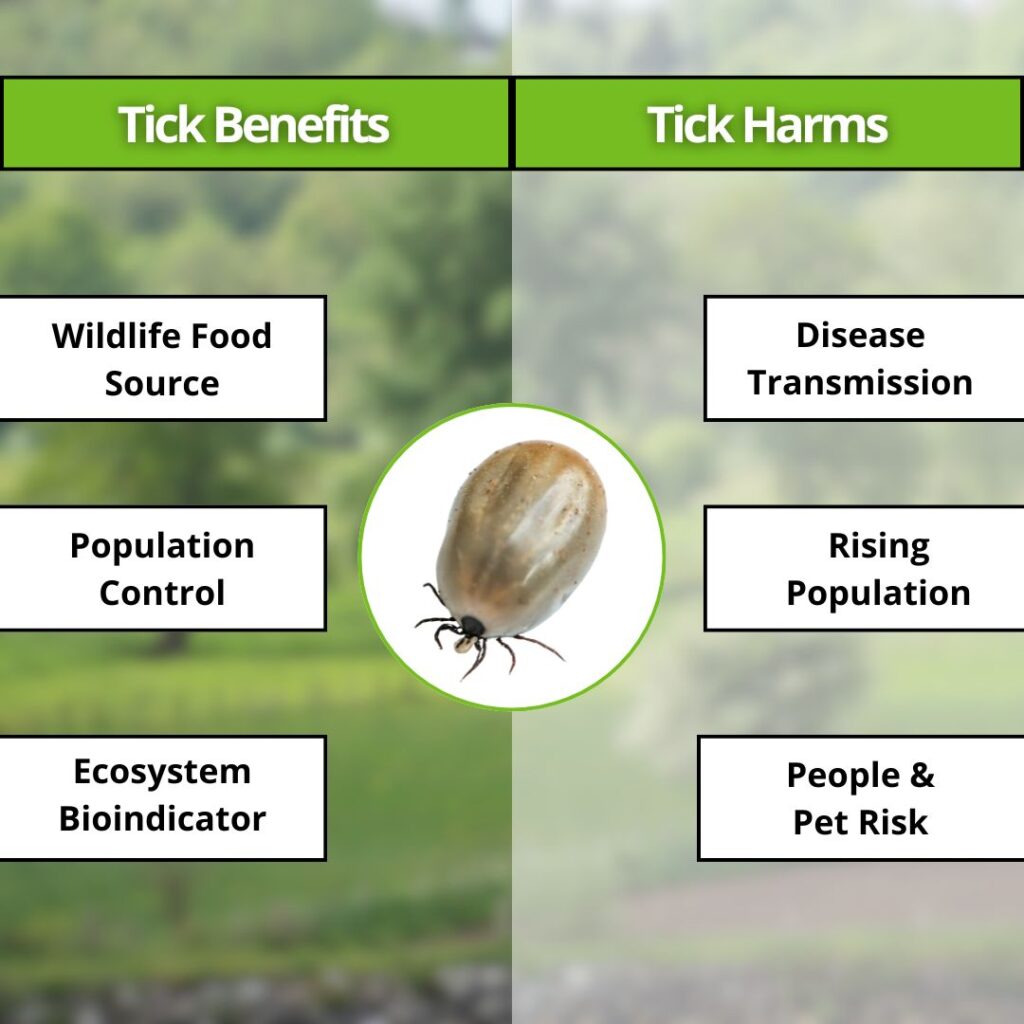
Ticks as a Food Source for Wildlife
Ticks are part of the diet for a variety of birds, reptiles, and small mammals. Opossums in particular consume large numbers of ticks each week as they groom themselves, making them an unsung ally in tick population control.
Ground-feeding birds like robins and wild turkeys also pick ticks off vegetation and animals as they forage.
The presence of tick-eating wildlife like opossums is one reason removing all “nuisance animals” from your yard without evaluation can backfire. By serving as a reliable food source, ticks support these predator populations and help maintain balance within the food web.
Population Control and Biodiversity
Ticks feed on a wide range of hosts, including deer, rodents, birds, and reptiles. Their cumulative effect can act as a natural check on host populations. A deer carrying a heavy tick burden may experience reduced reproductive success, which over time can prevent a single species from outcompeting others.
Ecologists note that moderate tick pressure on host populations encourages genetic diversity. Individuals who can tolerate or resist tick loads are more likely to pass on those traits.
This kind of selection pressure, while costly to individual animals, contributes to healthier and more resilient wildlife communities over time.
Ticks as Bioindicators of Ecosystem Health
Scientists and biologists use tick populations to assess the overall health of a habitat. A sudden spike in tick numbers can signal an underlying imbalance, such as overpopulation of deer or rodents, habitat disruption, or warming temperatures.
Conversely, a steep decline in ticks might indicate that the predator species keeping them in check is struggling. Tick population monitoring is a legitimate ecological tool, meaning even these creatures carry real information value for researchers tracking ecosystem change.
The Real Harm Ticks Cause
The ecological roles above are real. They are also largely irrelevant to a parent checking their child after a walk through a Georgia backyard. The risks ticks pose to human and animal health are significant.
Disease Transmission to Humans and Animals
Ticks are the most significant vector of disease-causing pathogens in the United States after mosquitoes. They transmit bacteria, parasites, and viruses that cause conditions ranging from mild discomfort to life-threatening illness.
Lyme disease, Rocky Mountain spotted fever, ehrlichiosis, anaplasmosis, and the Heartland virus are all transmitted through tick bites in the Southeast. Pets are also at risk. Dogs and cats can contract Lyme disease and other tick-borne infections, and a heavy tick infestation on any animal can cause anemia.
Tick-Borne Illnesses in Georgia
Georgia is home to at least five tick species that transmit disease, according to the Georgia Department of Public Health. The American dog tick carries Rocky Mountain spotted fever and tularemia. The lone star tick transmits ehrlichiosis and has been linked to alpha-gal syndrome, a red meat allergy.
The black-legged (deer) tick, which transmits Lyme disease, continues to expand its range in Georgia as winters grow milder. Between 2019 and 2023, 136 confirmed Lyme disease cases were reported in the state, and that number continues to rise. These are not remote wilderness risks. Ticks are active in suburban yards, parks, and the wooded edges of Atlanta neighborhoods year-round.
What Would Happen If Ticks Disappeared?
Eliminating ticks entirely would not produce a simple win for ecosystems. The predators that rely on ticks for food, including certain birds, reptiles, and small mammals, would lose a protein source. Host populations like deer and rodents, no longer subject to tick-related stress, could grow unchecked and lead to overgrazing and habitat degradation.
Research on timber rattlesnake populations in the eastern U.S. has found that healthy snake populations indirectly reduce tick numbers by controlling the mice and small mammals that ticks depend on. It is an example of how deeply interconnected these roles are.
None of this means ticks should be welcomed into your yard. It means the natural ecosystem works best when balanced, and that balance belongs in wild spaces, not around your home, children, and pets.
Related Questions to Explore
- Do ticks serve any purpose in nature? Yes, but their role in the wild does not make them safe to have in your yard. If ticks are showing up around your home, All South’s flea and tick treatments target them at the source before they reach your family.
- What animals eat ticks and help control them? Opossums are the most effective natural tick predators and can consume thousands of ticks per week. Natural predators help, but they rarely eliminate tick pressure entirely in a residential yard. A professional yard treatment from All South fills the gap.
- Are ticks good or bad for the environment? Both, depending on context. In wild ecosystems, ticks provide food for other species and help regulate wildlife populations. In residential settings near people and pets, the risks from tick-borne disease outweigh any local ecological benefit. For Georgia homeowners, it is more important to ask whether your yard is protected.
- How does climate change affect tick populations? Milder winters allow more ticks to survive through the cold season. The Southeast is particularly vulnerable because ticks are already active year-round in many parts of the region. That makes recurring professional treatment the more reliable approach for Georgia homeowners.
- Can ticks be beneficial to humans in any way? For practical purposes, ticks offer no direct benefit to people. The health risks they carry are entirely one-directional, which is why keeping them out of your yard is worth taking seriously.
- Why are tick populations growing? Milder winters from climate change, expansion of deer populations into suburban areas, habitat changes that bring wildlife closer to homes, and a decline in natural tick predators in developed areas are all factors. Passive prevention, like mowing and body checks, reduces exposure but rarely eliminates the problem on its own.
When to Call a Professional
DIY tick prevention, including mowing the lawn, clearing brush, removing leaf litter, and doing body checks after outdoor activity, reduces exposure but rarely eliminates tick pressure in a yard that borders wooded areas or has consistent wildlife activity.
A professional flea and tick treatment from All South Pest Control targets ticks at the source: the yard. Treatments focus on the edges of your property, shaded areas, and high-grass zones where ticks congregate while waiting for a host. Because you and your pets are the ones crossing that ground every day, the yard is where professional control makes the biggest difference.
All South offers both one-time treatments and recurring plans. Recurring service is the recommended approach because ticks are active year-round in Georgia, and a single treatment does not provide season-long protection.
If you are managing tick pressure in Atlanta, McDonough, or the surrounding areas, a call to All South is the right first step.
Conclusion
Ticks do have a place in the environment. They feed predators, regulate wildlife populations, and help scientists read the health of ecosystems.
That said, what importance ticks have to the environment matters far less than what they can do to your family. Lyme disease, Rocky Mountain spotted fever, and other tick-borne illnesses are real and growing risks in Georgia.
The best outcome is not to eliminate all ticks from the planet. It is to keep them out of the spaces where you live, work, and play. All South Pest Control has been protecting Atlanta-area homes from fleas and ticks for over 15 years, with treatments built around your yard, your schedule, and your family.
Get a quote or call to schedule your service today.

Recent Comments