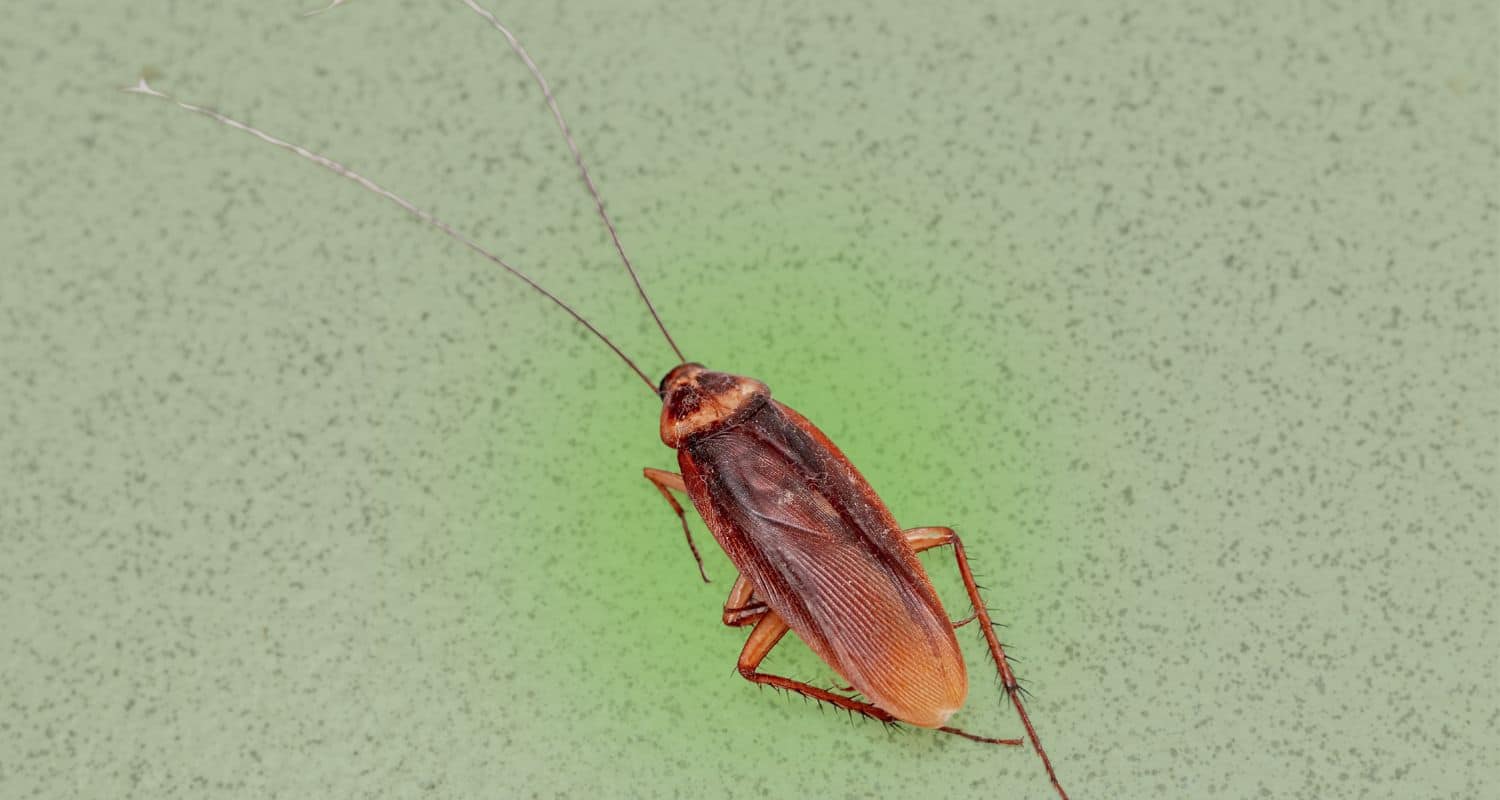
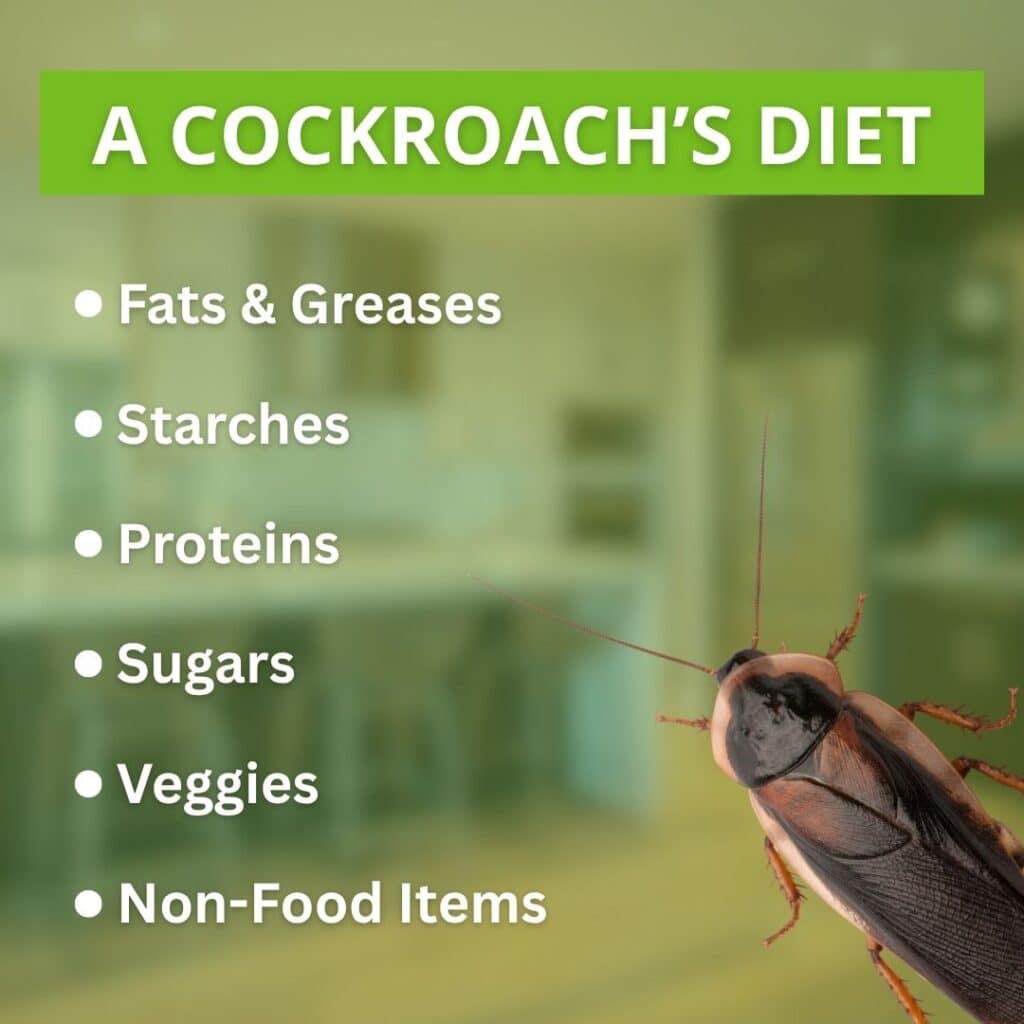
Cockroaches are omnivores that eat almost anything: starches, grease, meat scraps, rotting produce, cardboard, book bindings, soap, and even dead skin cells.
That flexible diet is exactly why they thrive in homes and why a single crumb on the floor can be enough to draw them in.
Knowing what cockroaches eat gives you a real advantage. Cut off their food supply, and you make your home far less hospitable. This guide covers what they eat, which species eat what, where they search for food, and how to stop them.
What Do Cockroaches Actually Eat?
Cockroaches are not picky. They eat both plant and animal material, and when preferred foods are scarce, they turn to items most people would never consider food.
Here is a closer look at what keeps them well-fed in your home.
Starches and Grains
Bread, pasta, rice, cereals, crackers, and flour are all high on the list. Starchy foods are calorie-dense and easy to find in kitchens and pantries.
Cockroaches can smell these food sources from a distance, which is why unsealed bags of flour or open cereal boxes are an open invitation.
Sugars and Sweets
Cockroaches have a strong pull toward sugar. Candy, cookies, juice spills, syrup, overripe fruit, and soda residue on the bottom of cans will all attract them.
German cockroaches are especially drawn to sugary items. If you are dealing with an infestation in the Atlanta or McDonough area, that sugar attraction is worth keeping in mind when checking your kitchen.
Fats, Grease, and Proteins
Grease is a cockroach magnet. The film under your stove, splatters on the backsplash, and residue near the grill are all active feeding zones.
Protein sources matter just as much: meat scraps, cheese, pet food, and even dead insects. Cockroaches need protein for growth and reproduction, so they actively seek it out wherever they can find it.
Non-Food Items
When regular food is unavailable, cockroaches turn to cardboard boxes, book bindings, wallpaper glue, toothpaste, bar soap, hair, and dead skin cells.
This means an otherwise clean home can still support a cockroach population if cardboard storage or cluttered closets are present.
According to the National Pest Management Association, cockroaches can go up to a month without food but only about a week without water. That is why they are also drawn to moisture-heavy areas: under sinks, around leaky pipes, and inside damp basements.
What Each Cockroach Species Prefers
Not all cockroaches eat the same way. Species differences matter for both prevention and treatment.
| Species | Preferred Foods | Most Common Location |
| German | Sweets, starches, grease, toothpaste | Kitchen, bathrooms |
| American | Decaying organic matter, fungi, and other insects | Basements, drains, crawl spaces |
| Brownbanded | Book bindings, wallpaper paste, adhesives | Bedrooms, offices, closets |
German Cockroaches
German cockroaches are the most common indoor species in Georgia homes. They strongly prefer sweets, starches, and grease, which is why kitchens are their primary target.
They also eat toothpaste and soap when other food runs out. German roaches reproduce quickly and are one of the hardest species to eliminate without professional treatment.
If you are seeing German cockroaches, check out our guide on common entry points for roaches in Atlanta houses to understand how they are getting in.
American Cockroaches
American cockroaches are larger, reddish-brown, and prefer fermented or decaying organic matter. They eat plant material, fungi, algae, and other insects.
You are more likely to find them in basements, drains, and crawl spaces than in kitchen cabinets. They tend to scavenge whatever they encounter rather than homing in on one food category.
Brownbanded Cockroaches
Brownbanded cockroaches favor non-food starchy materials: book bindings, wallpaper paste, and adhesives. They tend to spread throughout a home rather than staying near the kitchen.
Because their food source is not typical kitchen waste, they are often found in bedrooms, offices, and closets. That makes them harder to catch through standard kitchen-focused prevention.
Where in Your Home Do Cockroaches Look for Food?
Cockroaches hide near their food sources. These spots attract them most:
| Location | Why Cockroaches Target It |
| Kitchen counters and floors | Crumbs, spills, grease residue |
| Cabinets and pantries | Unsealed dry goods, loose packaging |
| Under appliances | Grease and crumb buildup under stoves, fridges, and microwaves |
| Bathrooms | Soap residue, toothpaste, shampoo, moisture |
| Basements and storage areas | Cardboard, paper, book bindings, high humidity |
For a room-by-room plan on cabinets specifically, see our guide on how to get rid of cockroaches in kitchen cabinets.
Basements and garages deserve special attention in Georgia, where year-round humidity gives cockroaches more opportunity to breed and forage than in drier climates.
How to Cut Off Cockroach Food Sources
Reducing what cockroaches can access is one of the most effective prevention steps you can take. Here is what works:
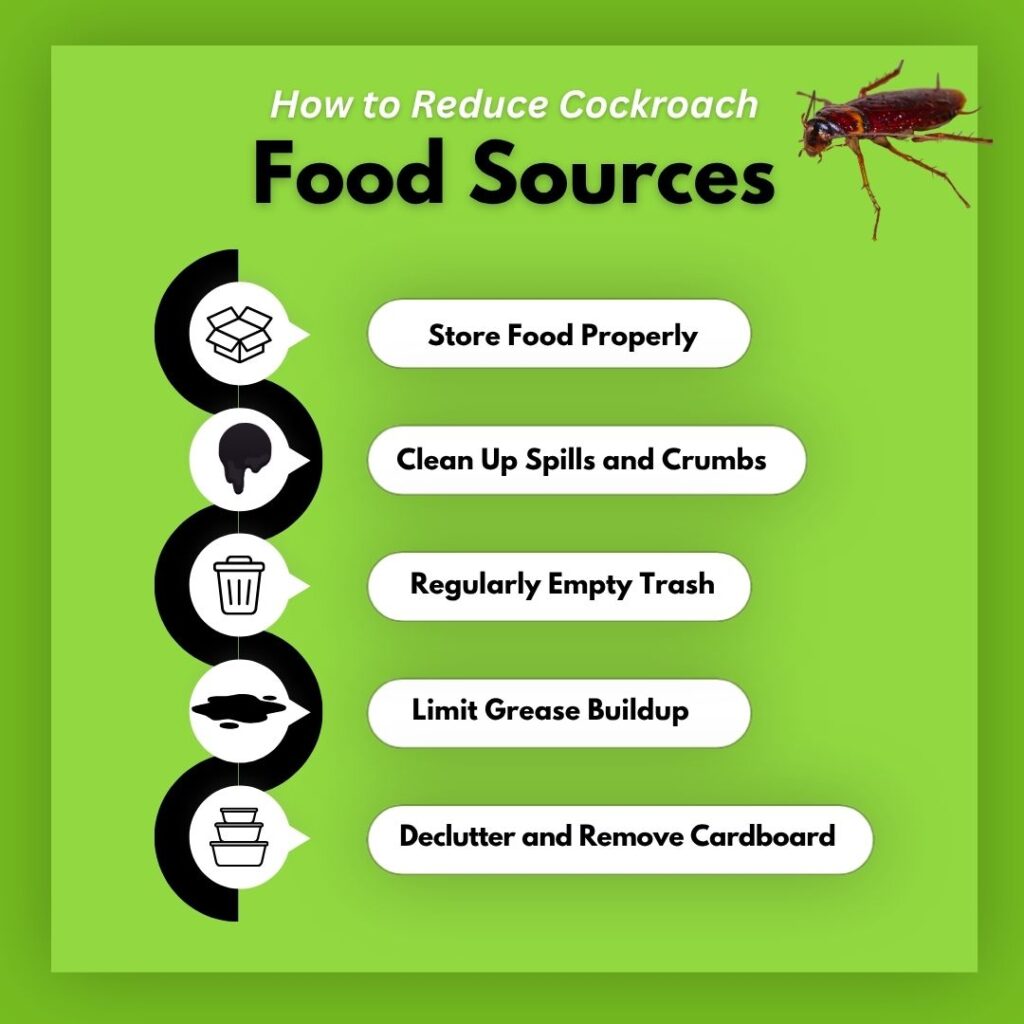
- Store food in airtight containers. Transfer flour, cereals, sugar, rice, and dry goods out of the original packaging into sealed containers. Include pet food. Leaving a bowl of kibble out overnight is a reliable cockroach attractant.
- Clean spills and crumbs immediately. Even small amounts sustain a population. Sweep or vacuum after meals and wipe down surfaces before going to bed.
- Empty trash daily and use lidded bins. Trash is a prime food source. Bins without lids, or bins that sit full overnight, draw cockroaches in from outside.
- Reduce grease buildup. Clean your stovetop, backsplash, and under the range hood on a regular schedule. Grease accumulates in places you may not notice until it becomes a feeding zone.
- Declutter cardboard and paper. Replace cardboard storage boxes with sealed plastic bins. Avoid letting paper bags or old newspapers pile up in garages or storage areas.
- Fix moisture issues. The CDC identifies cockroaches as pests that thrive in humid, moist conditions, and removing water sources is just as important as removing food. Fix leaky pipes under sinks and ensure basements and crawl spaces stay dry.
Signs You Already Have a Cockroach Problem
You may have a cockroach problem before you ever see one. Common signs include:
- Droppings: Small, dark specks resembling ground pepper, found near food sources, along baseboards, or in cabinet corners
- Egg casings (oothecae): Brown, capsule-shaped cases left in hidden spots like behind appliances or inside cabinet cracks
- Musty odor: A strong, oily smell that intensifies with larger infestations
- Smear marks: Dark, irregular marks along surfaces where cockroaches travel frequently
- Daytime sightings: Cockroaches are nocturnal. Seeing one during the day often signals an overcrowded, established infestation
Related Questions to Explore
- Why do I keep finding cockroaches in my kitchen even after cleaning? Cockroaches feed under and behind the stove, beneath the refrigerator, inside cabinet hinges, and in loose pantry packaging. It’s possible the food source is somewhere you have not reached yet. A professional inspection can pinpoint exactly where they are feeding and harboring.
- Does leaving pet food out attract cockroaches? Yes, and it is one of the most overlooked attractants in Georgia homes. Even a small amount of kibble left in a bowl overnight is enough to sustain a population. Pick up bowls after each feeding and store dry food in a sealed hard-sided container.
- Can cockroaches in my home make my family sick? Yes. Cockroaches carry bacteria, including Salmonella and E. coli, transferring them to food prep surfaces and food itself as they forage at night. Their droppings, shed skins, and saliva are also known allergens. Schedule an inspection to protect your family’s health.
- How do I know if cockroaches are coming in for food or are already living in my walls? Occasional sightings may mean foragers coming in from outside, but droppings in multiple rooms, egg casings, a musty odor, or daytime sightings all point to an established infestation inside your home. Professional treatment finds and eliminates the colony at the source.
- Can cockroaches survive without food? Yes, up to a month without food, but only about a week without water. Cleaning up food sources alone may not solve an established infestation. In Georgia’s humid climate, leaky pipes and damp crawl spaces can keep a population going long after the kitchen is spotless.
When to Call a Professional
If you are seeing cockroaches regularly, finding egg casings in multiple locations, or noticing activity during the day, the infestation has likely grown beyond what cleaning alone can fix.
German cockroaches in particular reproduce rapidly. Over-the-counter sprays often push them deeper into walls rather than eliminating the colony.
Georgia’s humid climate extends cockroach season and gives them more opportunity to breed and forage year-round.
A licensed pest control professional can identify the species, locate entry points and harborage areas, and apply targeted treatments that address the colony rather than just visible roaches.
All South Pest Control serves the McDonough, Atlanta, and surrounding Georgia areas. If you are seeing signs of a cockroach problem, contact our team or request a quote to schedule an inspection.
Conclusion
Cockroaches eat almost anything organic: starches, grease, proteins, sweets, cardboard, soap, and more. That wide-ranging diet is what makes them so hard to starve out and so easy to accidentally attract.
The most effective prevention combines airtight food storage, regular cleaning, moisture control, and eliminating cardboard clutter.
If the problem persists, professional treatment from a Georgia pest control specialist ensures the infestation is addressed at its source rather than just on the surface.

Recent Comments