

Mosquito season in Georgia typically runs from March through October, with the worst activity from June through August. If you live anywhere in the McDonough or greater Atlanta area, you already know mosquitoes are part of living here for most of the year, not just a July problem.
At All South Pest Control, we field more mosquito calls between late spring and early fall than almost any other pest. Here’s what’s actually driving that season, which species you’re dealing with, and what keeps them off your property.
When Is Georgia Mosquito Season?
In Georgia, mosquito season typically begins in mid-to-late March once daytime temperatures hold steady around 50°F. Thanks to mild fall weather, warm spells can keep them active well into November.
Rather than dying off in the winter, some species simply shelter in crawl spaces, tree bark, or culverts until warmer weather returns.
| Months | Activity Level | What’s Happening |
| December – February | Low | Cold weather keeps most mosquitoes dormant; occasional warm spells can briefly wake a few. |
| March – April | Moderate | Eggs from last season hatch as soil and air temperatures climb past 50°F. |
| May | Moderate–High | Asian tiger mosquitoes join the mix; daytime bites become more noticeable. |
| June – August | Peak | Heat and humidity are at their highest; nearly every species is active. August is typically the single worst month. |
| September – October | High, tapering | Activity stays strong into September and gradually declines through October. |
| November | Low–Moderate | Usually winding down, but a warm stretch can bring a temporary rebound. |
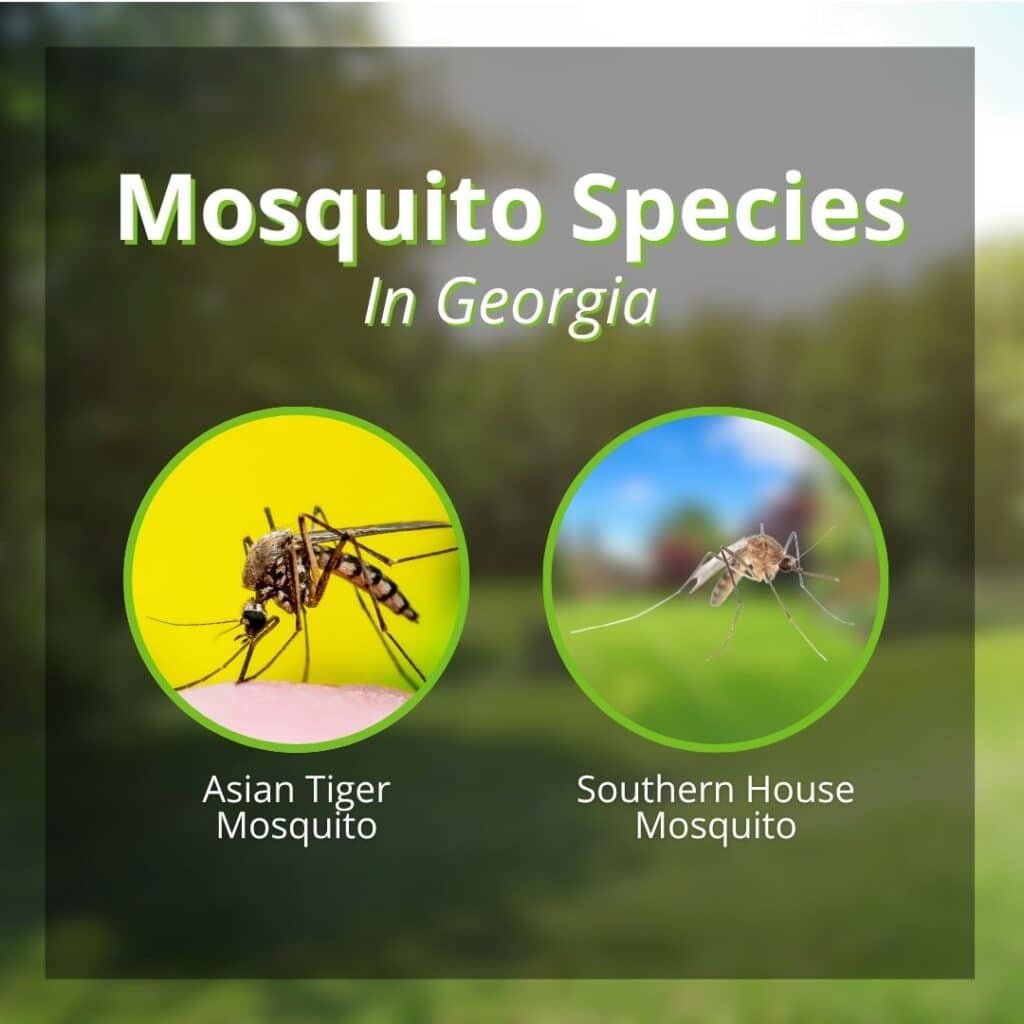
Mosquito Species Found in Georgia
Georgia is home to more than 60 mosquito species, but homeowners mostly deal with two.
| Asian Tiger Mosquito | Southern House Mosquito | |
| Look for | Black-and-white striped legs | Plain brown, less distinctive |
| When it bites | Daytime, aggressively | Dusk to dawn |
| Where it hides | Shaded yards, under porches, water-filled containers | Gutters, drainage areas, near structures |
| Main health risk | Nuisance bites; some disease potential | Primary carrier of West Nile virus in Georgia |
| Season length | Active statewide, spring through fall | Longer season in south/coastal Georgia than up north |
Health Risks of Mosquitoes
Most mosquito bites are just an itchy nuisance, but a few Georgia species carry real disease risk, tracked year-round by the state’s public health surveillance program.
| Disease | Main Carrier | Who’s at Risk | Symptoms to Watch For |
| West Nile virus | Southern house mosquito | Humans | Most cases are mild or symptom-free; severe cases can involve high fever, confusion, or neurological symptoms |
| Eastern Equine Encephalitis | Various Culex/Culiseta species | Humans (less common) | Sudden fever, headache, and in rare severe cases, neurological symptoms |
| Heartworm disease | Multiple species | Dogs and other pets | Not visible early; requires vet diagnosis |
Per the CDC’s guidance on West Nile virus, most infections cause mild or no symptoms, but severe cases warrant prompt medical attention.
How to Keep Mosquitoes Off Your Property
Mosquitoes need standing water to breed, so removing it is the single most effective thing a homeowner can do.
According to UGA Extension’s mosquito research, some of the most common breeding sites are ordinary yard items that hold water after rain, including birdbaths, clogged gutters, plant saucers, and forgotten buckets.
A few practical steps that make a real difference:
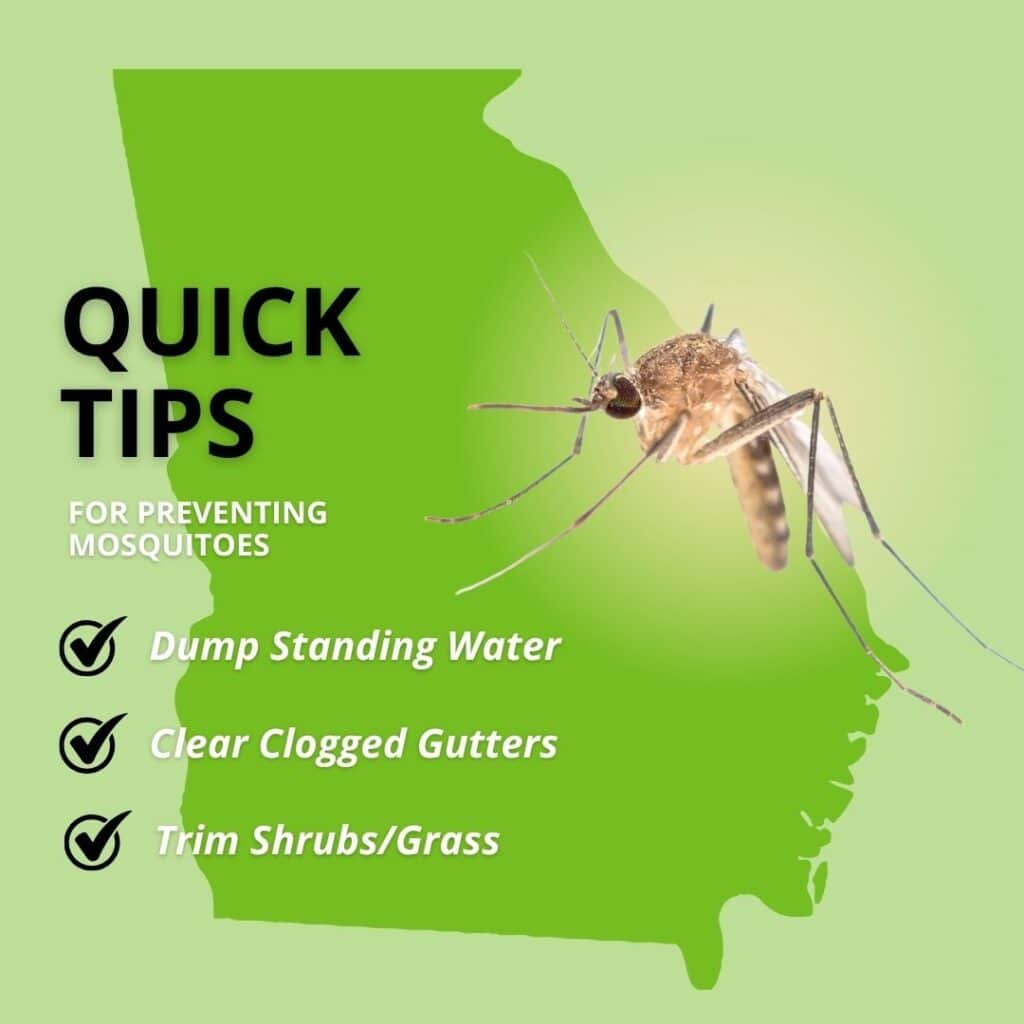
- Dump standing water weekly in birdbaths, plant trays, buckets, and anything else that collects rain.
- Clear clogged gutters so water doesn’t pool along the roofline.
- Trim shrubs and tall grass where adult mosquitoes rest during the day.
- Check window and door screens for gaps that let mosquitoes inside.
- Time outdoor activities around dawn and dusk if the Southern house mosquito is active in your area, since that’s peak feeding time.
Related Questions to Explore
- When does mosquito season end in Georgia? Most years, activity drops off by mid-to-late October once temperatures consistently fall below 50°F, though a mild fall can stretch that into November. That’s why most mosquito control programs run treatments through the fall rather than stopping after summer.
- What months are mosquitoes worst in Georgia? June through August, with August typically the peak month for both population and disease risk. This is the stretch where a season-long mosquito treatment plan earns its keep, since a single spray won’t hold up against that much pressure.
- Do mosquitoes go away in the winter in Georgia? Not entirely. Some species die off, but others overwinter as adults in sheltered spots, including crawl spaces and other damp, undisturbed areas, and can become active again during warm winter spells. It’s worth asking whether crawl space encapsulation makes sense alongside seasonal mosquito treatment.
- What attracts mosquitoes to a yard? Standing water is the biggest draw, since that’s where they lay eggs, followed by dense shade and tall grass where adults rest during the day. A mosquito control visit typically includes identifying and treating those exact spots, which is usually more thorough than what a homeowner can spot walking the yard alone.
When to Call a Professional
If you’re dumping standing water and trimming back shade and you’re still getting bitten in your own yard, that usually means there’s a breeding source you haven’t found, or the population pressure in your neighborhood is high enough that DIY steps alone won’t keep up.
That’s where a seasonal mosquito control program makes the difference, since it targets both the adult mosquitoes on your property and the areas where they’re likely to breed. All South Pest Control offers mosquito programs built around the length of Georgia’s season rather than a single one-time spray.
Conclusion
Mosquito season in Georgia runs roughly March through October, driven mainly by two species: the daytime-biting Asian tiger mosquito and the disease-carrying Southern house mosquito. Standing water removal is the single best DIY step, but a persistent problem usually means it’s time for a season-long treatment plan.
Get a quote from All South Pest Control to keep your McDonough-area yard usable all summer.

Recent Comments