An encapsulated crawl space is a crawl space that’s fully sealed off from outside air and ground moisture with a heavy-duty vapor barrier, closing off one of the easiest ways termites, rodents, and roaches get into your home.
At All South Pest Control, we get asked about crawl space encapsulation more for pest prevention than for anything else these days, and for good reason: a damp, open crawl space is close to an open invitation for pests looking for water, shelter, and a quiet place to nest.
Here’s what encapsulation actually does, how it shuts pests out, and what else it does for your home.
What Is an Encapsulated Crawl Space?
Encapsulating a crawl space means sealing the entire space from the outside air and ground moisture. A contractor installs a heavy-duty vapor barrier across the dirt floor and up the foundation walls, seals the vents and any gaps or cracks, and typically adds a dehumidifier to keep humidity under control. Some setups also include a sump pump if groundwater is a recurring issue.
This is a step beyond a basic vapor barrier, which only covers the floor. Encapsulation treats the whole space (floor, walls, and vents) as part of the building envelope, not an open-air crawl underneath it.
How Encapsulation Keeps Pests Out
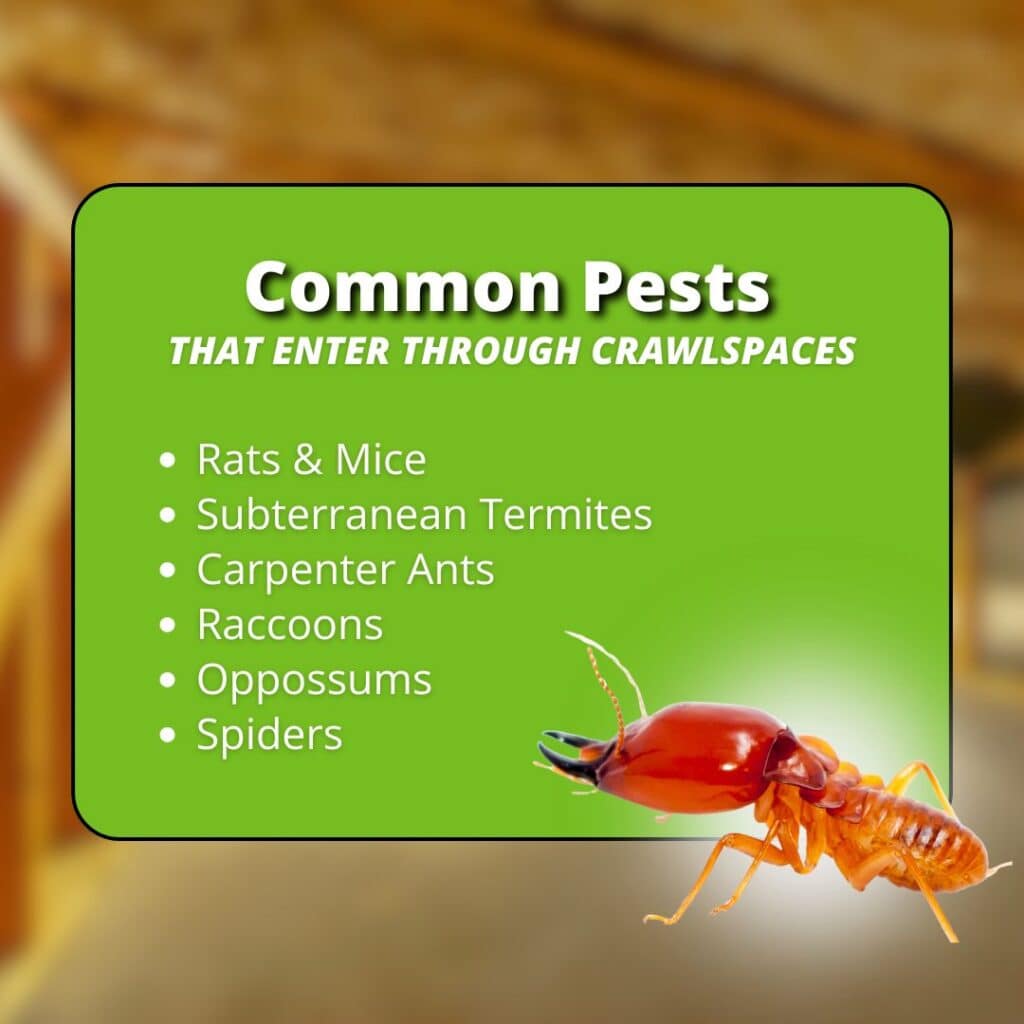
Moisture is the single biggest reason pests end up in a crawl space. Termites, cockroaches, and rodents all need water to survive, and an unsealed crawl space with a dirt floor and open vents gives them exactly that, along with a dark, undisturbed place to nest.
Sealing the space off removes the two things pests are after: water and easy access.
Termites and Wood-Destroying Insects
Floor joists above an unencapsulated crawl space are often the dampest wood in the house, making them a prime target for termites. A sealed vapor barrier cuts off the ground moisture that soaks into those joists, making the wood far less appealing to subterranean termites in the first place.
It’s not a substitute for termite treatment if you already have activity, but it removes a major contributing condition.
Rodents and Other Crawl Space Intruders
Open vents and foundation gaps are standard entry points for mice, rats, and even snakes looking for shelter. Sealing vents and access points during encapsulation closes off those routes.
According to the National Pest Management Association’s crawl space guidance, pests are drawn to crawl spaces because they’re dark, secluded, and often damp, which makes moisture control one of the most effective long-term prevention steps a homeowner can take.
Beyond Pest Control
Pest prevention is the angle we get asked about most, but it’s not the only reason homeowners encapsulate. A few other benefits worth knowing:
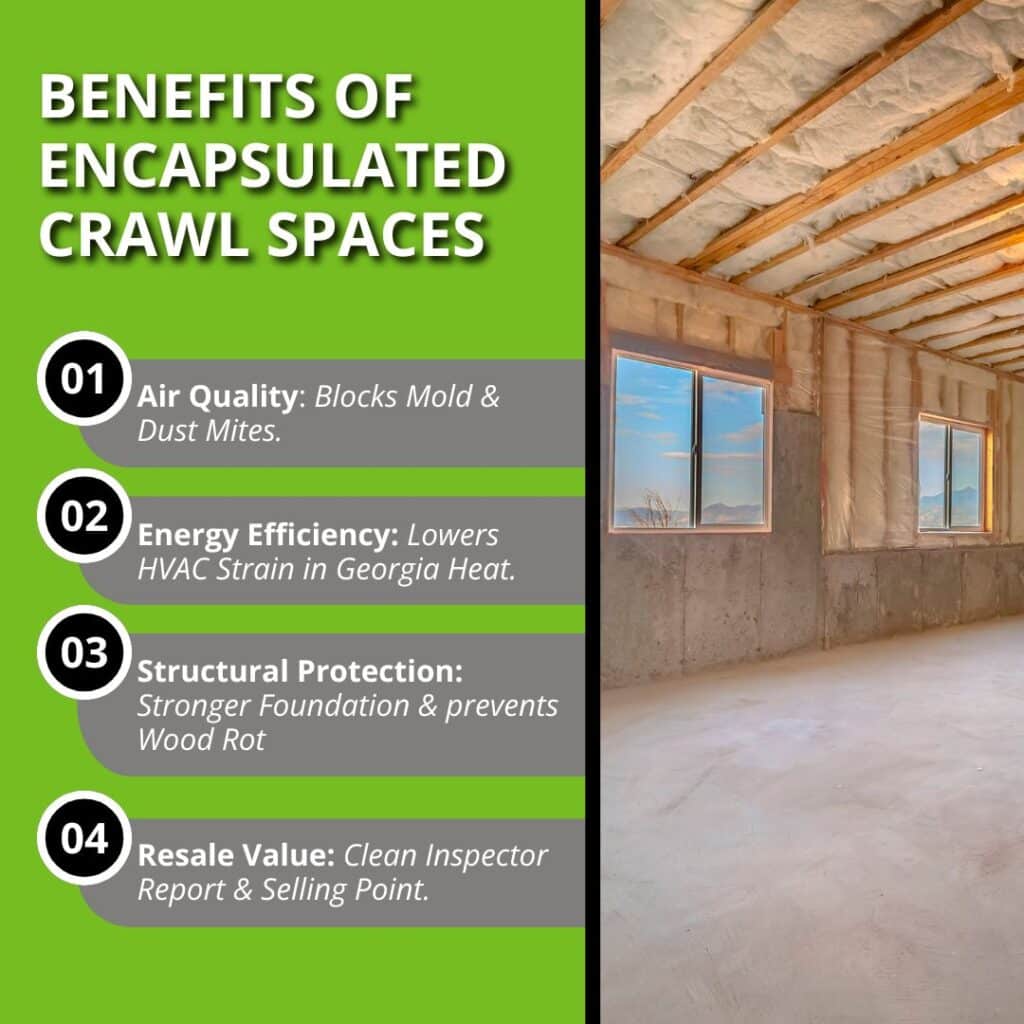
| Benefit | What It Actually Does |
| Air quality | Blocks mold spores, dust mites, and dampness from rising into your living space. |
| Energy efficiency | Seals out outdoor air, easing the load on your HVAC system during hot summers. |
| Structural protection | Prevents chronic moisture buildup that causes wood rot and weakens support beams. |
| Resale value | Creates a clean inspection report, turning a common negotiation hazard into a selling point. |
What Encapsulation Costs
A licensed pest control company can give you a firm number after walking the space, since photos alone don’t always show the full moisture picture.
There are a few factors that drive where your project lands in that range:
- Size of the crawl space: more square footage means more vapor barrier material and labor.
- Current drainage situation: a space that already floods or holds groundwater needs a sump pump added to the job.
- Existing moisture damage: rotted wood or active mold may need remediation before the barrier goes in.
- Access and layout: low clearance or a hard-to-reach crawl space adds labor time.
- Dehumidifier needs: whether a permanent dehumidification system is part of the scope.
Related Questions to Explore
- Does crawl space encapsulation add value to a home? Yes. A clean, dry, encapsulated crawl space is attractive to buyers and home inspectors alike, since it signals fewer future moisture and pest-related repairs.
- Can pests still get into an encapsulated crawl space? It’s much harder, but not impossible, if the barrier is damaged or a gap opens up over time. That’s why an annual check (often bundled into a pest control plan) matters even after encapsulation is installed.
- How long does crawl space encapsulation last? A properly installed vapor barrier and dehumidifier system typically lasts 15–20+ years with basic upkeep, though the dehumidifier itself may need servicing or replacement sooner.
- Is crawl space encapsulation the same as a vapor barrier? No. A vapor barrier is one piece of encapsulation. Encapsulation also seals vents and gaps and usually adds a dehumidifier, treating the whole space as sealed rather than just laying plastic on the floor.
When to Call a Professional
If you’re noticing a musty smell in the house, visible mold on crawl space framing, or signs of rodents or termites near the foundation, it’s worth having a professional take a look before deciding whether encapsulation makes sense for your home.
A trained technician can tell the difference between a moisture problem that needs encapsulation and one that just needs better drainage, and can spot early pest activity that a homeowner might miss walking through with a flashlight. If you’re in the McDonough or greater Atlanta area, All South Pest Control offers a full evaluation before recommending any work.
Conclusion
An encapsulated crawl space closes off one of the easiest ways pests get into your home by removing the moisture they need to survive. It also helps with air quality, energy bills, and resale value along the way.
If your crawl space has open vents, a dirt floor, or a musty smell, reach out to All South Pest Control for an evaluation of your McDonough-area crawl space.

Recent Comments