

To get rid of mice in the house before damage starts, you need to act early, remove what attracts them, block how they get inside, and stop the infestation at its source, not just where you see signs.
In many cases, mice rarely announce themselves right away. By the time most homeowners notice activity, damage has already begun.
This guide explains how mice enter homes, the early warning signs many people miss, why Georgia homes are especially vulnerable in winter, and what to do before a small problem turns into a costly one.
Why Mice in the House Are a Bigger Problem Than Most Homeowners Think
These rodents cause serious damage quietly and much faster than most homeowners expect.
For example, mice are constant chewers. Their teeth never stop growing, which forces them to gnaw on whatever materials are available.
Inside a home, that often means wiring, insulation, ductwork, and stored items.
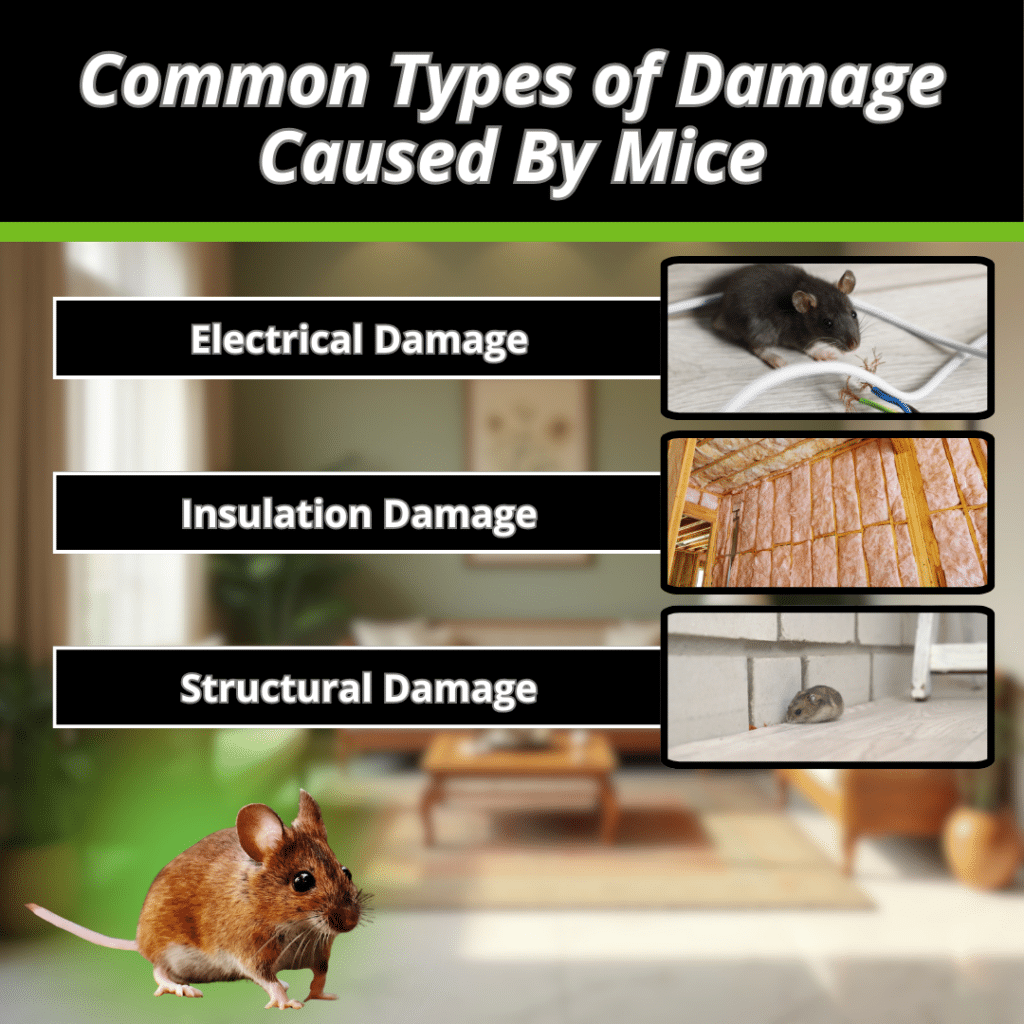
Common Types of Damage Caused By Mice
- Electrical damage: Mice chew wire coatings, increasing the risk of short circuits and house fires
- Insulation damage: Nesting destroys insulation, leading to higher heating and cooling costs
- Structural wear: Wood, drywall, and stored materials are often damaged
- Contamination: Droppings and urine contaminate food, countertops, and air quality
According to the Pest World, rodents are a known contributor to residential electrical fires due to damaged wiring.
Therefore, even minor chewing can create hidden hazards inside walls, attics, and crawlspaces.
Even more concerning, mice also reproduce quickly. A single female mouse can have multiple litters per year, each with several pups.
That means a small, unnoticed issue can become a widespread infestation in a matter of weeks.
Why Mice Are Common in Georgia, Especially During the Winter
Georgia’s climate allows mice to stay active year-round, but winter pushes them indoors.
Unlike colder regions, Georgia does not experience long freezes that reduce rodent populations.
As a result, mice remain active outside until temperatures drop just enough to make homes more appealing.
Why Does Winter Increase Mouse Activity Indoors?
- Outdoor food sources become limited
- Cooler nights drive mice toward heated structures
- Crawlspaces and attics stay warm and dry
- Homes are sealed tighter in winter, trapping mice once inside
In Georgia, mouse activity often begins increasing in late fall. By winter, mice have already found entry points and established nesting areas. Many homeowners first notice signs when mice are already settled in.
Homes with crawlspaces, garages, older foundations, or nearby wooded areas are especially attractive during colder months.
Early Signs You May Have Mice in the House
Early warning signs are often small, but noticing them quickly can prevent major damage.
At first, mice are nocturnal and avoid human activity, which makes early detection difficult. Paying attention to subtle clues is key.
Common Early Warning Signs of Mice
- Droppings: Small, dark pellets found in cabinets, drawers, or along walls
- Noises: Scratching, scurrying, or light tapping sounds at night
- Odors: A musty or ammonia-like smell from urine buildup
- Nesting materials: Shredded paper, insulation, cardboard, or fabric
- Grease marks: Smudges along baseboards or walls where mice travel
In many cases, seeing one mouse usually means more are present. Mice travel along edges and hidden pathways, so activity in one area often indicates wider movement throughout the home.
How Mice Get Into the House in the First Place
Mice enter through extremely small openings that many homeowners overlook.
Surprisingly, a mouse can squeeze through an opening as small as a dime. That means even minor gaps can become entry points.
Common Mouse Entry Points
- Gaps under exterior doors or garage doors
- Cracks in foundations or siding
- Openings around plumbing, wiring, or HVAC lines
- Poorly sealed attic or crawlspace vents
- Damaged soffits or roofline gaps
Once inside, mice follow walls and structural edges to stay hidden.
This is why blocking entry points early is one of the most effective ways to stop an infestation before it grows.
How to Get Rid of Mice in the House Before Damage Starts
To get rid of mice in the house before damage starts, you must combine early detection, sanitation, exclusion, and proper control.
Focusing on only one step usually leads to repeated problems.
Step 1: Remove Food and Nesting Attractants
Mice stay where food and shelter are easy to find.
- Store pantry items in sealed containers
- Clean crumbs and spills daily
- Secure pet food overnight
- Reduce clutter that provides nesting material
Step 2: Block Access and Movement
Next, limiting entry and travel paths reduces infestation spread.
- Seal visible gaps with rodent-resistant materials
- Replace worn door sweeps
- Close off crawlspace and attic access points
Step 3: Address Active Mice
Finally, traps may reduce visible activity, but they rarely address nests or entry points. Acting early prevents wiring damage, contamination, and reproduction.

DIY Mouse Control Methods and Where They Fall Short
DIY methods can help with minor issues, but they often fail to solve the full problem.
Many homeowners rely on traps or store-bought solutions. These tools may catch individual mice but rarely eliminate the source.
| DIY Method | What It Helps With | Limitations |
| Snap traps | Removes individual mice | Does not prevent new entry |
| Glue traps | Shows activity areas | Sanitation and humane concerns |
| Ultrasonic devices | Easy setup | Limited proven effectiveness |
| Store-bought bait | Attracts mice | Can worsen infestations if misused |
DIY efforts often delay proper treatment, allowing damage to continue behind the scenes.
When to Call a Professional for Mice in the House
At this point, professional help is needed when mouse activity persists or spreads.
Call a professional if:
- Droppings appear daily
- Mice are seen in multiple rooms
- Traps stop working
- You hear activity in the ceilings or crawlspaces
- Electrical or insulation damage is suspected
As a result, professionals focus on inspection, exclusion, and long-term prevention, not just removal.
How All South Pest Control Stops Mouse Damage Before It Spreads
Effective rodent control starts with identifying how and why mice entered the home.
Therefore, All South Pest Control uses a comprehensive approach designed to stop damage early and prevent future infestations.
What the Process Includes
- Detailed interior and exterior inspection
- Identification of entry points and nesting areas
- Targeted treatment based on activity patterns
- Exclusion services to block future access
- Ongoing monitoring and follow-up
Usually, this approach reduces the risk of repeat issues and hidden damage.
How to Prevent Mice From Coming Back Into the House
Prevention is the most cost-effective long-term solution.
Prevention Tips for Homeowners
- First, seal cracks and gaps annually
- Then, trim vegetation away from the home
- Store firewood away from structures
- Use sealed containers for food
- Finally, schedule routine pest inspections
Prevention works best when combined with professional inspections that catch risks early.
Related Questions
How fast can mice cause damage inside a home?
Mice can begin chewing wiring and insulation within days of entry.
Are mice active year-round in Georgia?
Yes. Georgia’s climate supports year-round activity, with winter driving mice indoors.
Do mice leave on their own?
No. If food and shelter remain available, mice will stay and reproduce.
Is one mouse a serious problem?
Yes. One mouse often indicates a larger hidden population.
How much damage can mice cause before being noticed?
Significant damage can occur before homeowners hear or see mice and other rodents.
Conclusion
Ultimately, mice may seem minor at first, but the damage they cause can escalate quickly. Knowing how to get rid of mice in the house before damage starts protects your home, safety, and long-term costs.
Therefore, early action makes the biggest difference. If you suspect mouse activity or want help preventing future problems, professional guidance can help stop damage before it spreads.
All South Pest Control offers thorough inspections and effective rodent control solutions tailored to Georgia homes.

Recent Comments