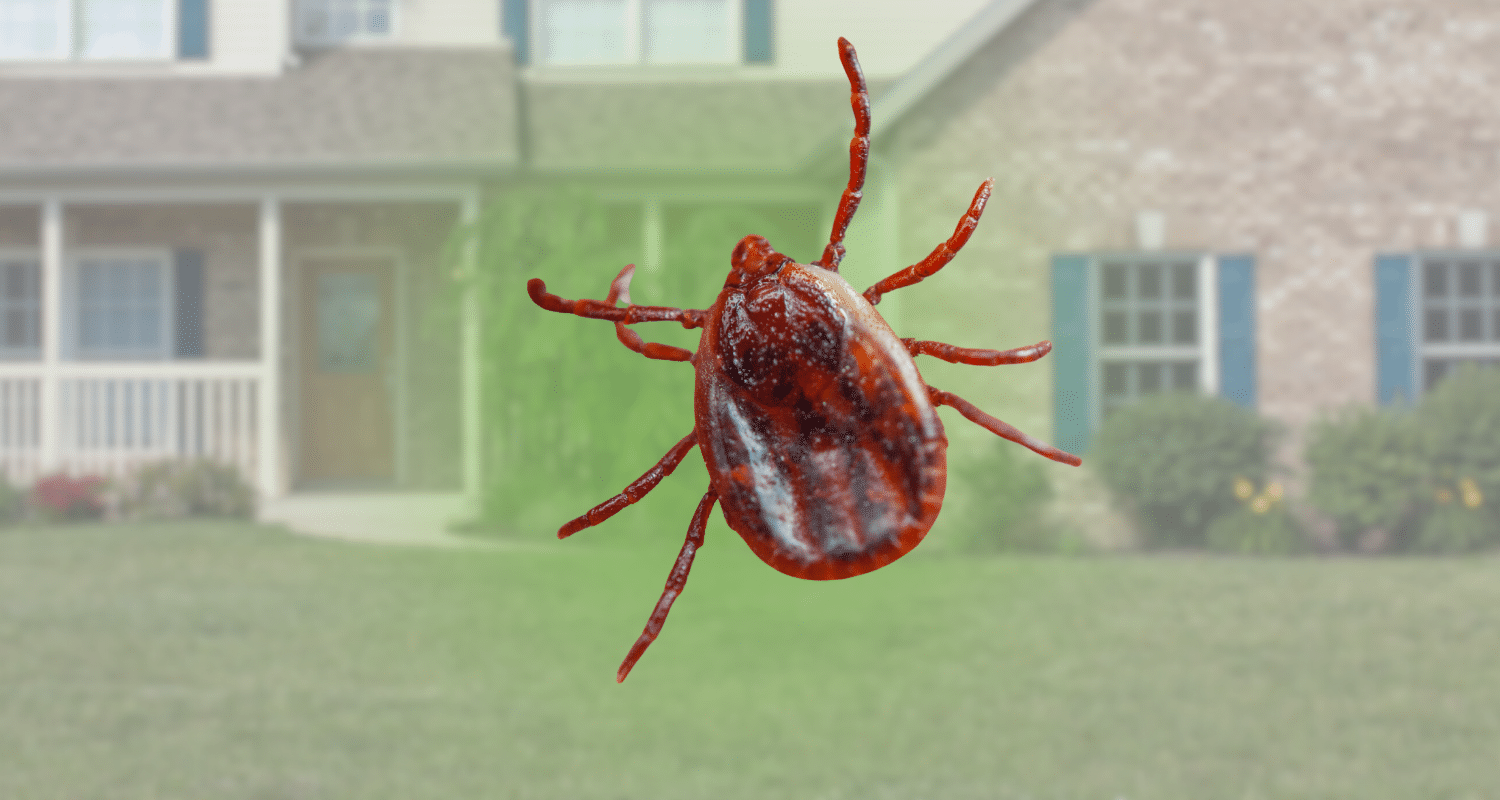
Most tiny bugs that get mistaken for ticks turn out to be something else, most often clover mites, carpet beetles, or weevils.
The fastest way to tell them apart is to count the legs: eight legs means you’re likely looking at a tick or mite; six legs means it’s an insect. From there, a few more checks confirm what you’ve actually found.
The Fastest Way to Tell: Leg Count and Body Shape
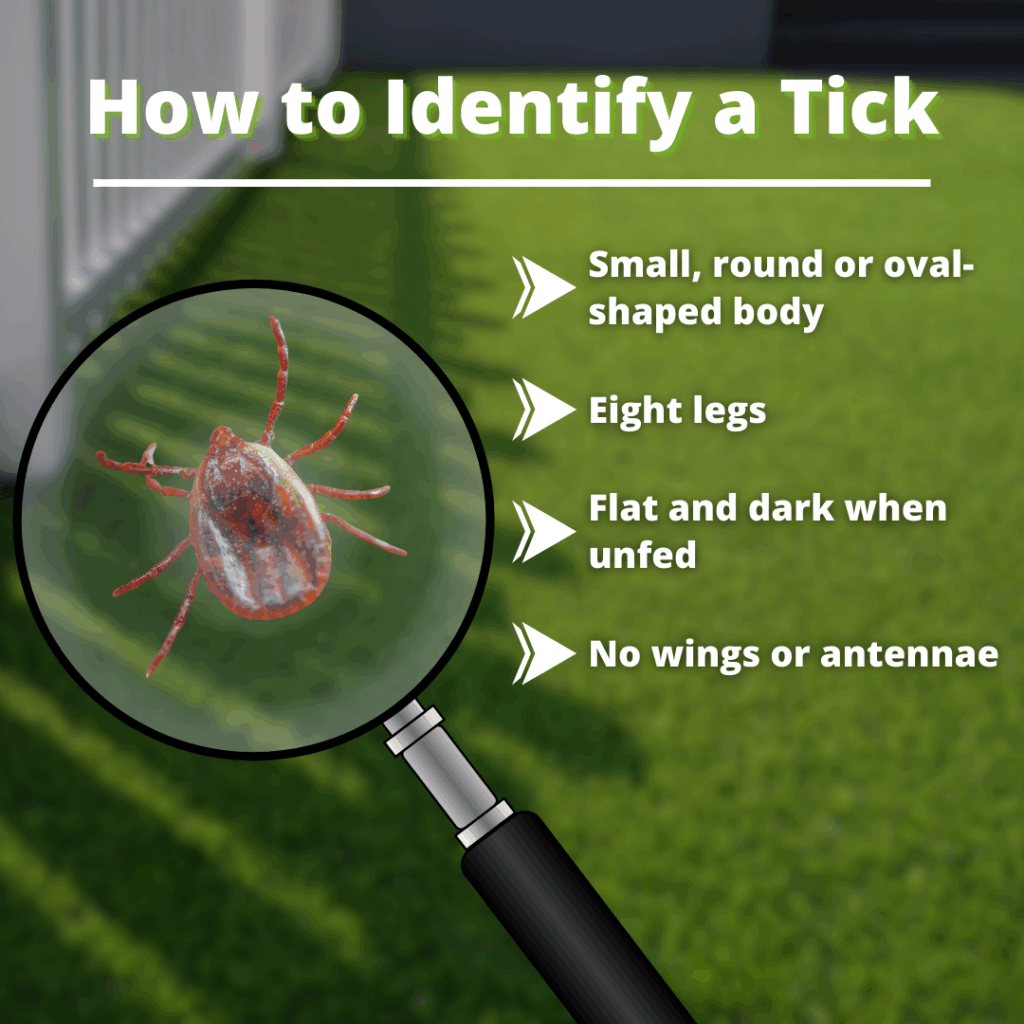
Before looking at color or size, check these four things:
- Leg count: Ticks have eight legs as adults. Six legs means it’s an insect, not a tick.
- Antennae: Ticks don’t have antennae. If you see antennae, it’s not a tick.
- Body shape: Ticks have a rounded, segment-free body with no hard shell. Beetles look shiny and shell-like by comparison.
- Behavior: Ticks attach and feed on blood for an extended period. Lookalikes typically don’t stay latched on.
Quick-reference table:
| Lookalike | Legs | Antennae? | Bites Humans? | Where You’ll Find It |
| Clover Mite | 8 | No | No | Sunny windowsills |
| Carpet Beetle | 6 | Yes | No | Closets, rugs, fabric |
| Weevil | 6 | Yes (clubbed) | No | Pantries, gardens |
| Bird Mite | 8 | No | Yes (can’t survive on humans) | Near nests, attics |
| Bed Bug | 6 | Yes | Yes | Mattresses, furniture seams |
| Actual Tick | 8 | No | Yes | Pets, skin, grassy/wooded areas |
Common Bugs Mistaken for Ticks
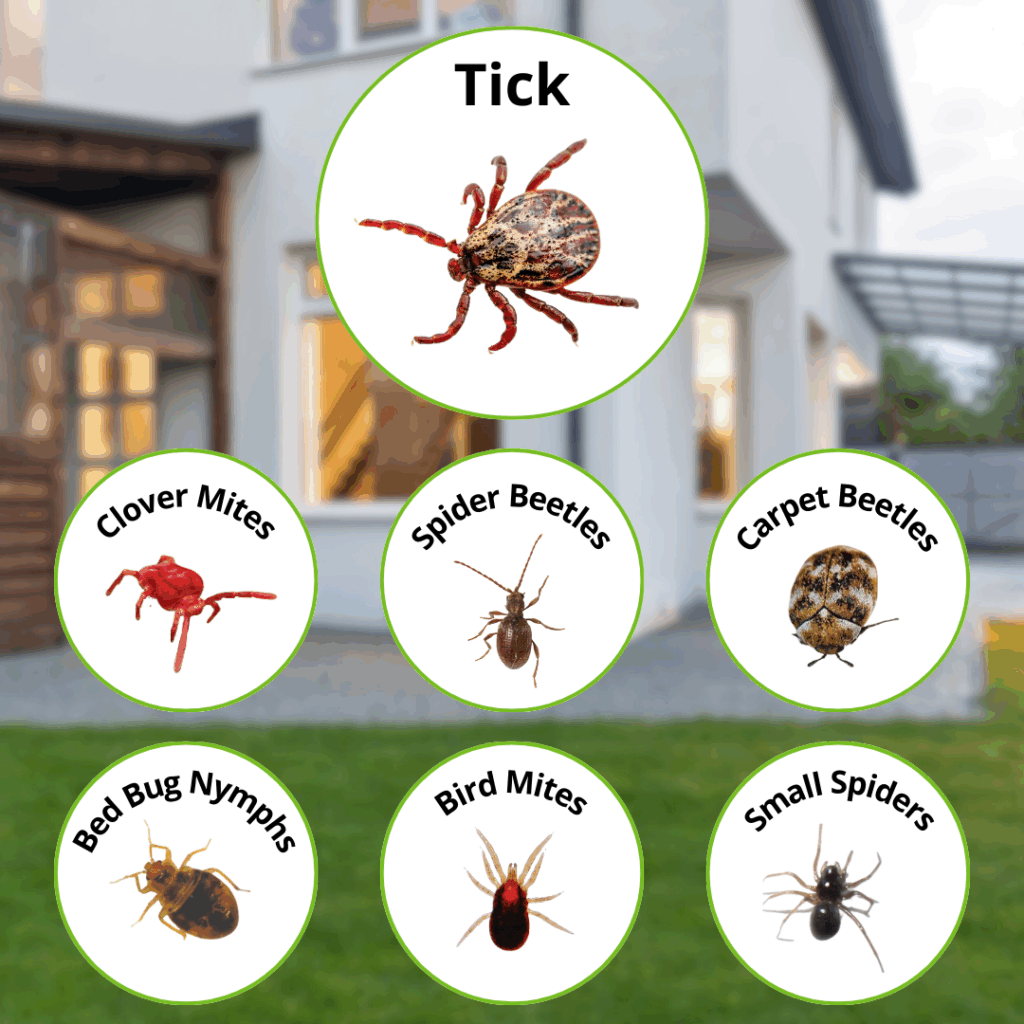
While ticks are a frequent concern for homeowners, several small insects share a similar size, color, or shape and are easily misidentified at first glance.
Clover Mites
Bright red, pinhead-sized, and often found clustered on sunny, south-facing windowsills. Clover mites are plant feeders, not blood feeders, and they don’t bite humans. They’re a moisture and entry-point issue more than a pest control issue, and sealing gaps and controlling humidity usually resolves an infestation without chemical treatment.
Carpet Beetles
These have a similar rounded shape and coloring to ticks, but they have six legs, antennae, and a hard, shiny shell. Carpet beetles feed on natural fibers like wool, fur, and feathers rather than blood, and they’re common indoor pests unrelated to tick activity.
Weevils
Small brown or black beetles, often mistaken for ticks, especially in their nymph stage before they develop the shield-shaped body typical of adults. Weevils have six legs and a pair of clubbed antennae, and they pose no threat to people, though some species damage plants.
Bird Mites
Small, grayish-to-reddish mites that arrive when birds nest near a home. They can bite and cause itchy welts, but they can’t survive long on human hosts since their life cycle depends on birds.
Bed Bugs
Sometimes confused with ticks due to size, but bed bugs have visible antennae, eyes, and a segmented abdomen that ticks lack. Unlike a tick bite, bed bug infestations tend to involve multiple bites in a line or cluster and require a different treatment approach entirely.
A Step-by-Step ID Process
- Count the legs. Six means insect, eight means tick or mite. This single check eliminates most lookalikes immediately.
- Look for antennae. Ticks have none. If you see antennae, even short ones, it’s not a tick.
- Check the body shape. Ticks are rounded and soft-bodied with no visible shell. A shiny, hard outer casing points to a beetle.
- Note the behavior. Is it latched on and feeding, or moving around freely? Ticks attach and stay put; lookalikes generally don’t.
- Consider the location. Where you found it narrows things down fast; see the table below.
If you’re still unsure after these four checks, don’t guess. A clear photo or a sealed sample handed to a pest professional gets you a confirmed answer faster than searching further online, and it matters more here than with most household bugs.
Why Correct Identification Matters
Misidentifying a harmless clover mite as a tick can cause unnecessary worry about Lyme disease exposure. Going the other direction, assuming a real tick is one of its lookalikes, is the more serious mistake, since it can mean missing a bite that carries disease risk.
Roughly 476,000 people in the U.S. are diagnosed and treated for Lyme disease each year, which is why getting the identification right, not just reassurance, is what actually matters.
There’s also a treatment-side reason identification matters, not just a health one. Each of these pests responds to a different fix, and applying the wrong one wastes time while the actual problem continues:
| If It’s Actually… | The Wrong Response | The Right Response |
| Clover mites | Spraying pesticide indoors | Sealing entry points, reducing exterior moisture |
| Carpet beetles | Treating for ticks or fleas | Laundering fabric, vacuuming, removing larvae food source |
| Weevils | Calling for pest control immediately | Discarding infested pantry items, checking for entry points |
| A real tick | Assuming it’s a harmless lookalike | Proper removal, bite-site monitoring, pet and yard treatment |
Treating clover mites like a tick problem, for example, often means spraying pesticide indoors that does nothing to stop them, since the actual issue is moisture and an entry point outside. Treating carpet beetles like fleas means missing the fabric and fiber sources that are actually feeding the infestation.
Getting the ID right the first time saves both the wasted effort and the extra week or two a mismatched treatment costs.
How to Prevent These Bugs From Getting Indoors in the First Place
Most of these lookalikes and actual ticks share a few common entry points, which means a handful of preventive habits cut down on all of them at once:
- Seal exterior gaps. Caulk cracks around windows and doors, since clover mites and many small insects use these as their primary entry point.
- Manage exterior moisture. Keep gutters clear and grade soil away from the foundation. Damp conditions near the home’s perimeter draw in several of these pests.
- Reduce vegetation contact with the home. Trim shrubs, grass, and groundcover back from exterior walls, since clover mites in particular migrate indoors from vegetation growing right against the siding.
- Store natural-fiber items properly. Wool, fur, and feather-based items kept in sealed containers are far less likely to develop a carpet beetle infestation than items left exposed in open closets.
- Check pets after outdoor time. This is the single most effective habit against real ticks specifically, since pets are the most common way they end up indoors at all.
When Look-Alikes Point to a Different Problem
Where you find the bug is often as useful as what it looks like:
| Location | Likely Culprit | Typical Fix |
| Sunny, south-facing windowsills | Clover mites | Seal gaps, reduce exterior moisture near the sill |
| Closets, rugs, stored fabric | Carpet beetles | Vacuum thoroughly, launder affected fabric, address larvae source |
| Pantry, near stored grains | Weevils | Discard infested food, seal containers |
| Near a bird nest or attic vent | Bird mites | Remove the nest source, seal entry points |
| On a pet, on skin, after time outdoors | Actual tick | Check for attachment, remove properly, monitor bite site |
If you’ve found clover mites, the fix is usually sealing entry points and reducing humidity rather than a pest treatment. The fix for carpet beetles is addressing the fiber-based materials they’re feeding on.
If what you’ve found is genuinely a tick, that calls for a different response entirely, starting with checking yourself, family members, and pets for bites.

What to Do If It’s an Actual Tick
If your identification check points to a real tick, especially one already attached:
- Use fine-tipped tweezers to grasp it as close to the skin as possible.
- Pull upward with steady, even pressure. Don’t twist or jerk, which can leave mouthparts embedded.
- Clean the bite area and your hands with rubbing alcohol or soap and water.
- Note the date and, if possible, save the tick in a sealed bag or container in case symptoms develop later.
- Watch the site for the next several weeks for a rash, especially a bullseye pattern, or flu-like symptoms, and contact a doctor if either appears.
Why Georgia Homes See a Lot of These Look-Alikes
Georgia’s warm, humid climate supports large populations of both real ticks and their most common imposters, clover mites and carpet beetles especially. Clover mites are most active in spring and fall when temperatures are mild, which is also when they tend to migrate indoors looking for shelter, explaining why windowsill sightings often cluster around those transition seasons.
Carpet beetles, meanwhile, are active year-round indoors once established, feeding on natural fibers regardless of outdoor temperature. This overlap in timing is part of why so many homeowners find themselves second-guessing a tiny bug on the windowsill in March. Multiple lookalikes and actual ticks can all be active in the same season.
Related Questions to Explore
- Are bugs that look like ticks dangerous? Most are not. Clover mites, carpet beetles, and weevils don’t bite or transmit disease. The real danger comes from actual ticks, which can carry Lyme disease and other tick-borne illnesses.
- Do clover mites bite? No. Clover mites feed on plants, not blood, and they don’t bite humans or pets.
- Can bird mites live on people? They can bite, but they can’t survive on humans long-term since their life cycle depends on birds as hosts.
- Do ticks live indoors? Ticks typically live outdoors in grassy or wooded areas and only come inside on pets or clothing. They rarely establish an indoor infestation the way fleas or bed bugs can.
- Should I call pest control if I can’t identify a bug? Yes, especially if you’ve been bitten or you’re seeing the same bug repeatedly indoors. A photo or physical sample is usually enough for a professional to confirm what you’re dealing with.
When to Call a Professional
If you find a bug you can’t confidently identify, save it or take a clear photo rather than guessing. This matters most if you’ve already been bitten, since the right response depends entirely on what actually bit you.
It’s also worth calling in a professional if you’re seeing the same insect repeatedly indoors, since recurring sightings point to an active infestation rather than a one-off encounter.
Beyond identification, a professional visit is worth scheduling if:
- You’re finding clover mites or carpet beetles in large numbers repeatedly, which suggests an entry point or fiber source that hasn’t been addressed
- You’ve found what appears to be an actual tick indoors, since that can point to a pet bringing them in or, less commonly, an outdoor population close enough to migrate indoors
- Bites are appearing without a clearly identified source, which is worth ruling out bed bugs, bird mites, or other biting pests rather than assuming ticks by default
Conclusion
Many bugs that look like ticks are harmless to people, but real ticks can carry disease. The challenge is telling them apart quickly and accurately. By sealing entry points, keeping your yard tidy, and protecting your pets, you can dramatically reduce encounters with both ticks and their look-alikes.
If you’re still unsure about what you’ve found, don’t take chances. All South Pest Control can help identify the pest and provide safe, effective treatment to protect your home, family, and pets.

Recent Comments