
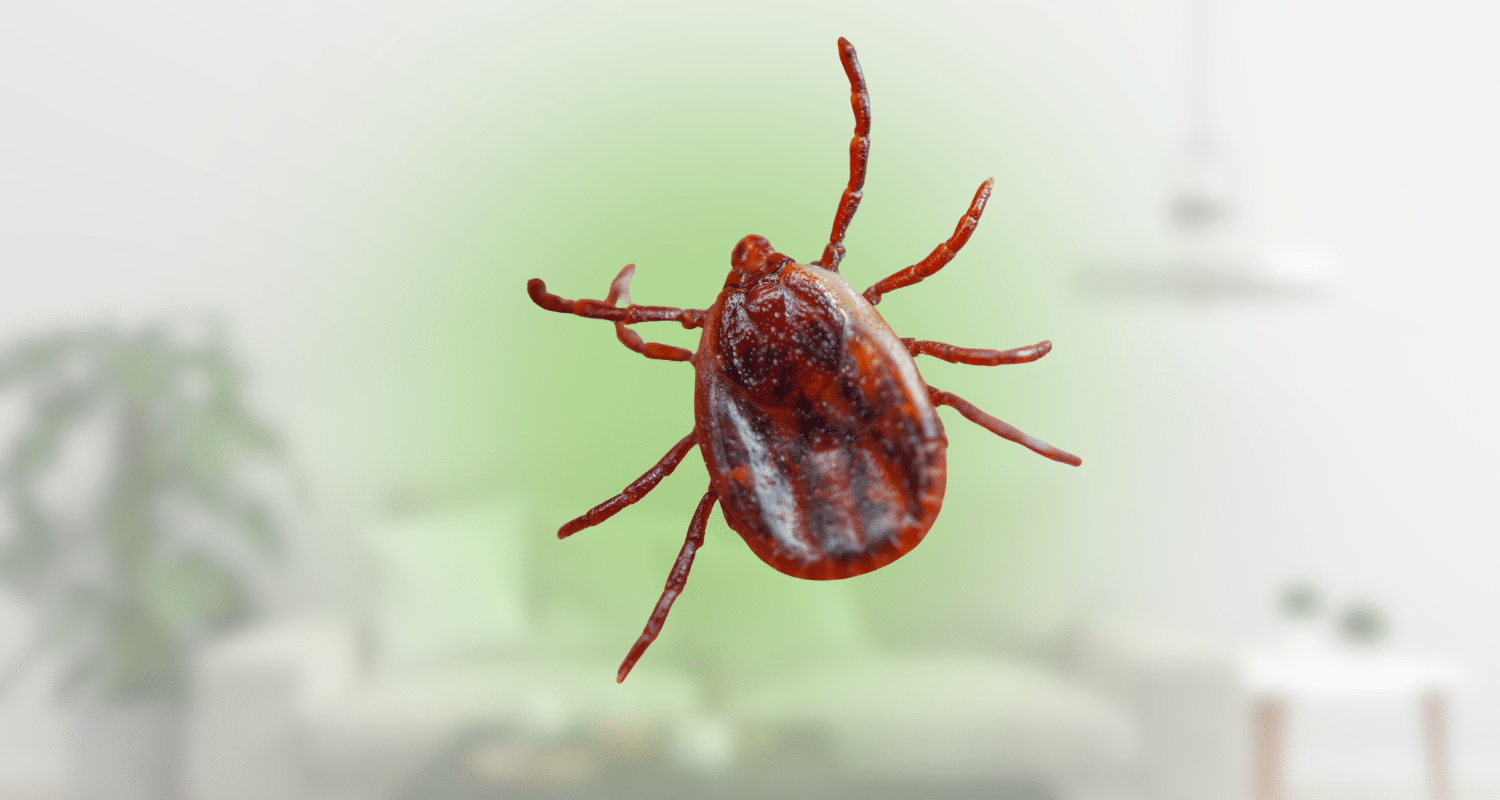
Ticks can live inside a house during winter for several weeks to several months, depending on the species, temperature, and whether they have access to a host.
Indoor heat keeps them active even when it is freezing outside, so winter does not fully stop ticks from surviving or spreading.
This guide explains how long ticks can live in a house during winter, where they hide, and how to get rid of them. You will also learn when to call a professional and how All South Pest Control helps keep homes protected year-round.
Why Ticks Can Still Live in a House During Winter
Many people assume winter kills ticks completely. Outdoors, freezing temperatures can slow them down or shorten their lifespan. Indoors, the story changes.
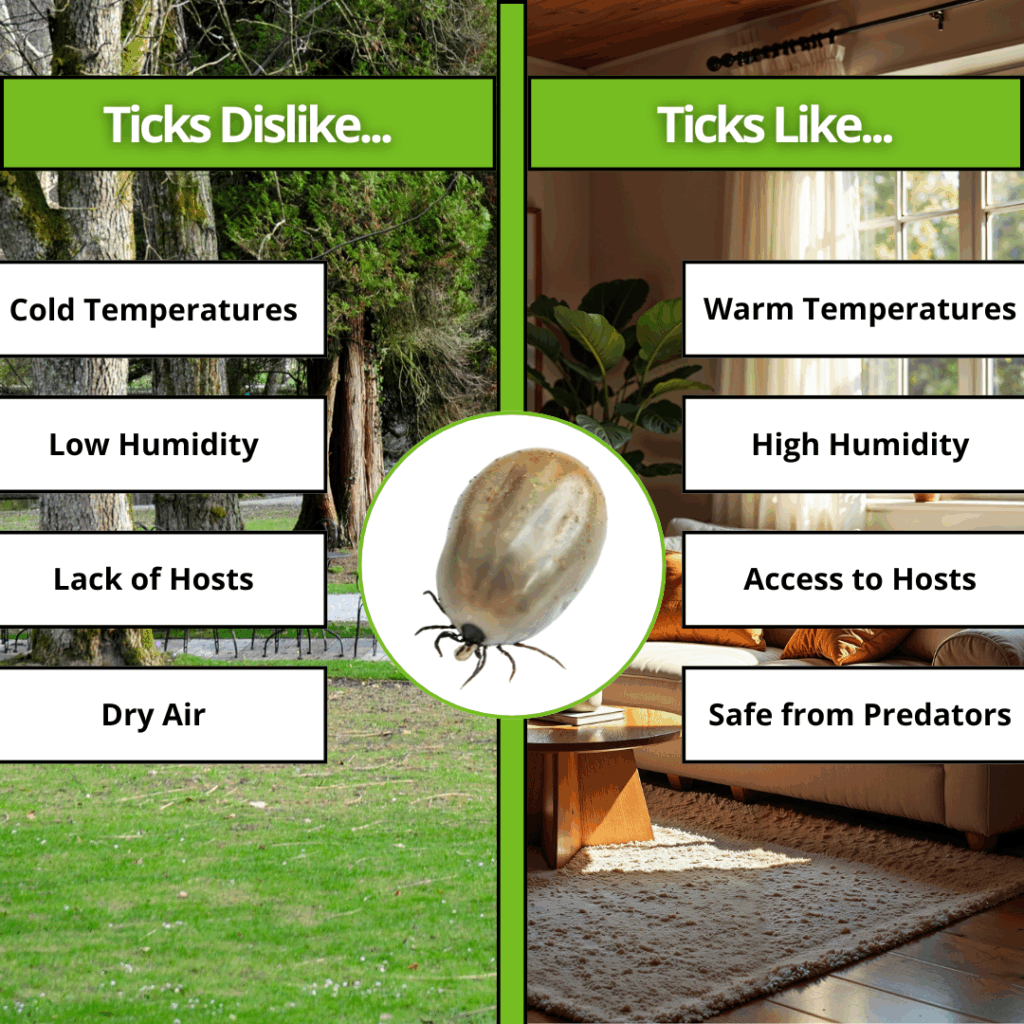
Warm air from heaters, stable humidity, and steady access to pets give ticks everything they need to survive.
Southern states, like Georgia, also stay warmer for longer, which means winter tick activity is often higher than homeowners expect.
Indoor environments can support ticks in several ways:
- Heated rooms create ideal temperatures.
- Pets spend more time inside during winter.
- Humidity from showers, cooking, and laundry helps ticks stay hydrated.
- Clutter and fabrics give ticks many hiding places.
How Long Can Ticks Live in a House During Winter?
Ticks can live inside a house during winter for a surprisingly long time.
Ticks can live without a host for different amounts of time, depending on their life stage, with adult ticks surviving up to two years in good conditions.
Indoor heat prevents the cold from slowing them down. Their survival depends on a few factors:
- Tick species
- Whether they find a host
- The humidity levels inside the home
Below is a general guide:
| Tick Situation | Average Indoor Survival Time | Notes |
| With regular access to a host | 2 to 3 months or longer | Most common with pets indoors |
| Without a host | Several days to a few weeks | Some species survive longer |
| In warm, humid rooms | Several months | Ideal survival conditions |
| Cold or dry rooms | Only a few days | Low humidity reduces lifespan |
Key species that affect Southern homes include the American dog tick, lone star tick, and brown dog tick. The brown dog tick is especially known for thriving indoors for long periods.
How Heat Helps Ticks in Winter
- Temperatures between 68 and 75 degrees keep ticks active.
- Heated floors, vents, and carpets create warm microclimates.
- Many homes never drop 65 degrees below in winter.
Pets also play a major role. A tick that stays attached to a pet has everything it needs to survive the winter inside a home.
Pro Tip: If ticks appear during winter, it often means one or more ticks came inside on a pet, clothing, or wildlife and then found a stable place to hide.
Where Ticks Hide Inside a Home During Cold Weather
Ticks need warmth, darkness, and moisture. Winter indoor environments create all three, which gives them many places to hide.
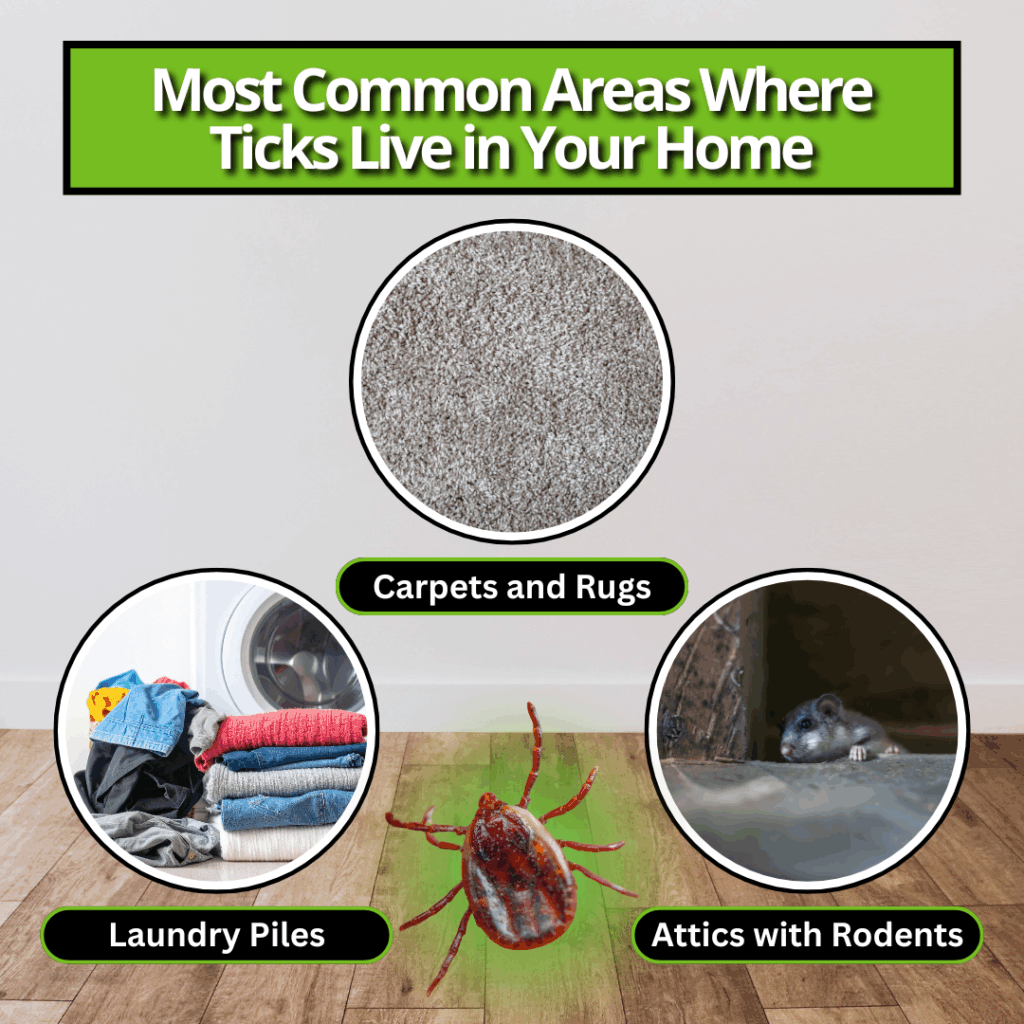
Common hiding spots include:
- Baseboards
- Cracks in the flooring
- Bedsheets and blankets
- Soft carpets and rugs
- Pet bedding
- Laundry piles
- Upholstered furniture
- Crawl spaces
- Attics with wildlife activity
- Stored holiday decorations
Ticks do not live in big groups like ants or termites. Instead, they hide alone in small spaces, which makes them harder to spot.
Signs You Still Have Ticks in the House During Winter
Ticks do not always leave obvious signs at first. Small changes around the home can mean a winter infestation is starting.
Common signs include:
- Pets scratching more than usual
- Tiny dark specks on bedding or furniture
- Small red bumps on your skin
- A tick crawling on clothing or fabric
- Bite marks that appear after sitting on carpet or furniture
- Ticks appearing near windows, walls, or baseboards
Pets may show warning signs before people do. This includes shaking their heads, biting at their fur, or hiding more often.
Even a single winter tick sighting is enough reason to act, since ticks reproduce quickly in warm indoor conditions.
What Makes Winter Tick Infestations Worse
Winter may feel like a break from pests, but it can actually make tick issues worse inside a home. Here are the top reasons:
1. Pets Spend More Time Indoors
With shorter daylight hours and colder mornings, most pets stay inside longer. This gives ticks more time to feed and reproduce.
2. Homeowners Lower Their Guard
Many people assume ticks die off in winter and delay treatment. That delay allows ticks to spread into carpets and furniture.
3. Wildlife Activity Increases
Rodents and small animals often enter homes in winter. They can carry ticks into attics, crawlspaces, and insulation.
4. Heating Systems Create Ideal Conditions
Warm and humid air lets ticks live longer than they could outdoors in the same season.
All these factors combined can make winter one of the easiest times for ticks to spread indoors without being noticed.
How To Get Rid of Ticks in the House During Winter
Ticks can be removed in winter, but the process works best with a step-by-step plan. Indoor heating keeps them active, so fast action is important.
Step 1: Wash and Heat-Treat Fabrics
Place bedding, pet blankets, and clothing in the dryer on high heat for at least 10 minutes. Heat kills ticks quickly.
Step 2: Vacuum High Risk Areas
Focus on carpets, baseboards, behind furniture, and pet areas. Empty the vacuum bag outdoors right after.
Step 3: Treat Pets
Use vet-approved tick prevention. Winter is not a safe break from treatments.
Step 4: Reduce Humidity
Indoor humidity below 50 percent makes it harder for ticks to survive.
Step 5: Seal Entry Points
Look for gaps where wildlife or rodents may enter. Small openings around attic vents, crawl spaces, or garages can introduce ticks into the home.
Step 6: Schedule Professional Treatment
DIY methods help reduce ticks, but indoor winter infestations often require professional-grade products and services that homeowners cannot buy.
When To Call a Professional for Winter Tick Removal
You should call a professional pest control company if:
- Ticks keep appearing even after cleaning
- You find ticks in multiple rooms
- A pet keeps bringing ticks indoors
- You find ticks in your bed or on furniture
- Anyone in the home is getting frequent bites
- You see signs of rodents or wildlife
Professional treatment is important because winter tick issues often involve more than just ticks. Wildlife, rodents, and attic conditions can all play a part.
All South Pest Control offers services that help with all winter infestation types incuding:
- Flea and tick control
- Mosquito control
- Wildlife control
- Rodent control
- Termite control
- Insulation services for attic hygiene and prevention
A full winter inspection helps identify the root cause and stops the problem before spring arrives.
Related Questions
How do ticks get into the house during winter?
Most ticks enter on pets, clothing, or wildlife. Even one female tick can begin an indoor infestation.
Can ticks survive on clothing in cold weather?
Ticks can live on clothing for several hours or longer if the fabric stays warm. Heat drying is the best way to kill them.
How long do ticks live without a host indoors?
Some species survive only a few days. Others, like brown dog ticks, can live for several weeks.
Can rodents bring ticks into the attic?
Yes, rodents are a major carrier of ticks during winter. If you hear scratching in the attic, rodents may be involved.
Do ticks live in carpets or furniture during winter?
Yes. Warm carpet fibers and soft fabric surfaces create small spaces where ticks can hide for long periods. They can also live in attics, crawl spaces, and basements.
Does winter pest control help with other insects?
Yes. Treatments and pest control services can reduce spiders, ants, and other pests that remain active indoors during cold months.
Conclusion
If you are spotting ticks in your home during winter, a fast inspection can prevent a bigger issue in spring. All South Pest Control provides year-round protection for ticks, fleas, wildlife, rodents, termites, and more.
Contact our team to schedule a winter inspection and keep your home safe and comfortable all season.

Recent Comments