

Ants do not follow a strict calendar, but they do follow temperature. Understanding when ants are most active in your area, which species are most common, and when prevention efforts are most effective can help you stay ahead of infestations before they establish indoors.
Is There Actually an Ant Season?
Ant activity is governed primarily by temperature, moisture, and food availability rather than by a fixed calendar date. That said, in most parts of the United States, ants are most active from March through October, with peak activity during the summer months of June through August.
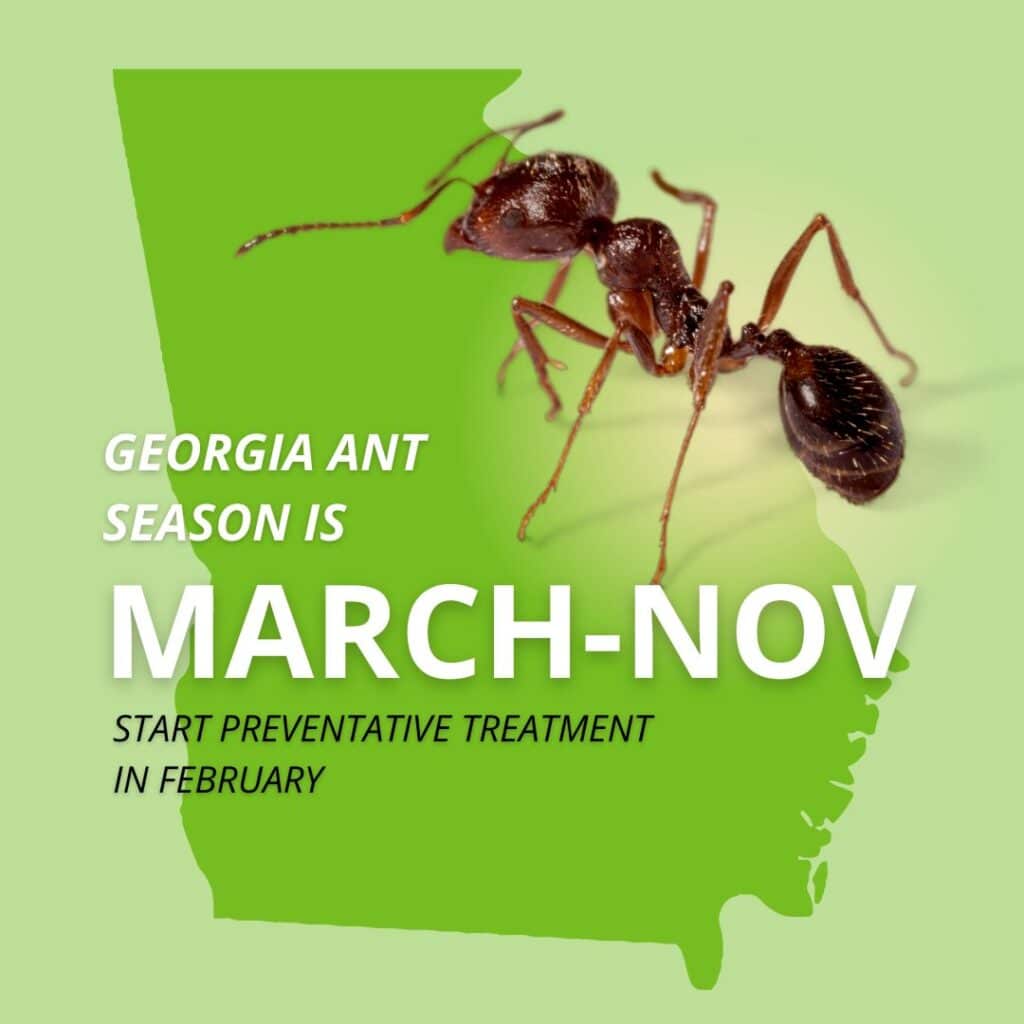
In Southern states, including the Gulf Coast, the Southeast, and Florida, the active season extends even longer. Ants in these regions can be active from early March through November, and fire ants remain active year-round in Florida and the Deep South whenever temperatures stay above freezing.
Ant activity does not disappear in winter. Most species reduce foraging significantly in colder months, but indoor infestations in heated buildings can remain active throughout the year. In the fall, many species aggressively seek indoor shelter as outdoor temperatures drop.
Ant Activity Through the Seasons
Spring (March to May)
Spring is when homeowners most commonly experience sudden, unexpected surges in ant activity. As soil temperatures reach 50 to 60°F, colonies that have been dormant or semi-dormant through winter emerge and begin aggressive foraging. Worker populations expand rapidly during this period as queens ramp up egg production.
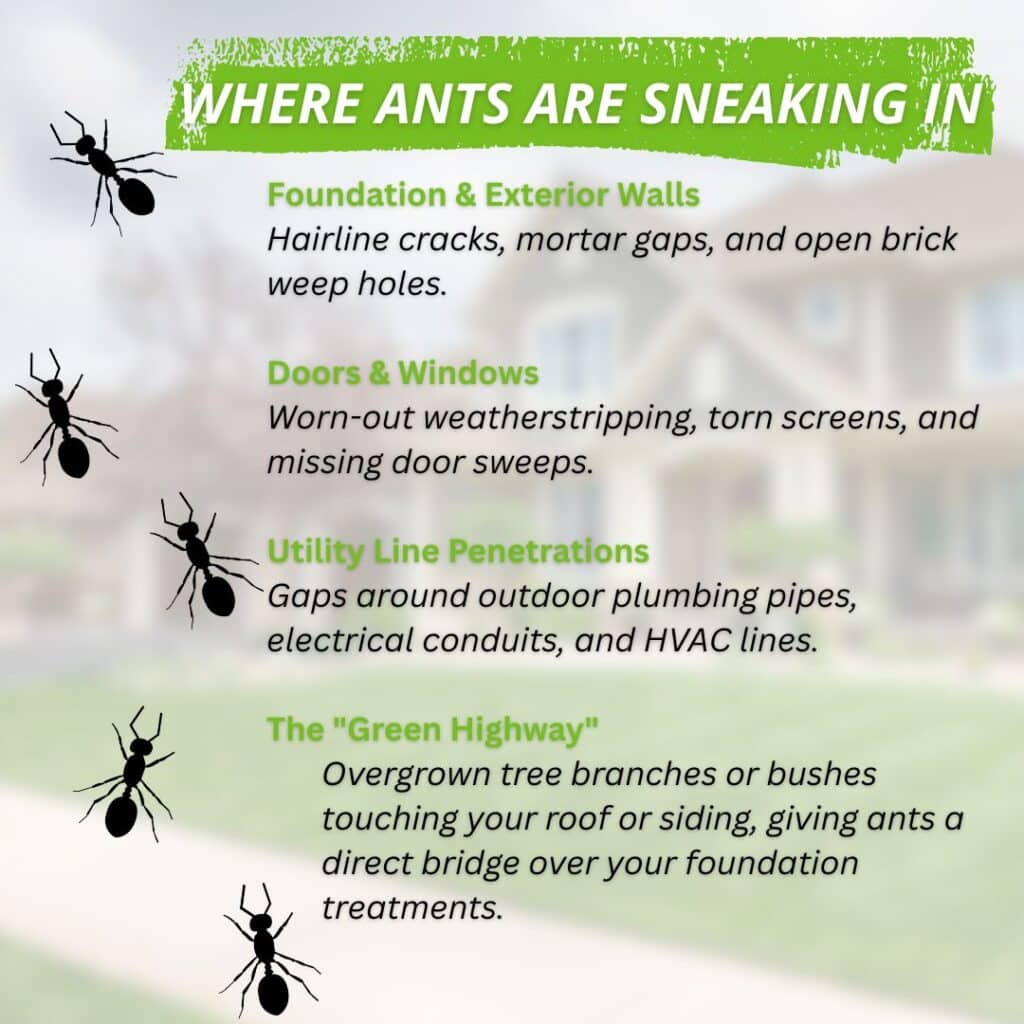
Spring is also the most important time for preventive treatment. Bait applications placed before colonies are at full strength intercept new queens and reduce the likelihood of established indoor infestations later in the season. Sealing exterior cracks and gaps in late winter and early spring, before soil temperatures rise, cuts off the entry points ants use when they emerge.
What to watch for: Sudden appearance of ant trails along baseboards or near food prep areas, particularly in March and April as temperatures warm. Winged reproductive ants (swarmers) appearing indoors or near the foundation are a sign that a colony nearby is reproducing.
Summer (June to August)
Summer is peak ant season. Colony populations reach maximum size during hot months as warmer temperatures accelerate metabolism, reproduction, and foraging. Most ant species conduct their nuptial flights (reproductive swarming events) during late spring and early summer when conditions are optimal.
Different species reach peak activity at different points. Carpenter ants and odorous house ants tend to peak in May and June. Pavement ants are most active in June. Imported fire ants, particularly active in Southern states, maintain consistent activity throughout the hot months wherever temperatures remain in their preferred 70 to 85°F soil range.
Summer also brings ants indoors for moisture. Air-conditioned homes provide both temperature relief and water sources. Leaky pipes, condensation lines, and standing water in bathrooms and under sinks attract ants that would otherwise forage outdoors.
What to watch for: Trails leading to water sources in kitchens and bathrooms, mounds or colony activity in landscaping near the foundation, and increased ant presence around outdoor entertaining areas where food and drink are present.
Fall (September to November)
Fall ant activity often surprises homeowners who assume the summer season has ended. Many species, particularly odorous house ants, intensify their indoor entry as temperatures drop and they seek warmth and stored resources for the colony.
In temperate climates, fall is frequently when indoor ant problems are first discovered in heated spaces.
Fall is also a secondary treatment window. Colonies are transitioning toward winter mode, and bait applications in early fall can significantly reduce population size going into winter, lowering the spring emergence intensity.
What to watch for: Ants entering near window frames, door thresholds, and utility penetrations as overnight temperatures drop. Finding small ant trails in wall voids or inside cabinetry, particularly in kitchens.
Winter (December to February)
Most outdoor ant colonies enter a dormant or reduced-activity state in cold months. Workers cluster in the deeper parts of their nests, survive on stored food reserves, and minimize surface foraging.
However, colonies in heated buildings do not experience this seasonal slowdown. Indoor infestations, particularly of odorous house ants and German cockroach-adjacent pests, can remain active year-round in well-heated structures. In Southern states, milder winters mean reduced but not absent activity.
What to watch for: Ants appearing in heated bathrooms, kitchens, or laundry rooms during winter are almost certainly an established indoor infestation, not random entries from outside. Structural treatment, not just baiting, is typically needed.
Ant Species and Their Peak Activity Times
Different species are most active at different points in the year.
| Ant Type | Peak Activity | Key Characteristics & Behavior |
| Carpenter Ants | • April–May • Nests active year-round indoors | • Nocturnal (prefers 50–80°F) • Attracted to moisture-damaged wood and wall voids |
| Odorous House Ants | • March–October • Active year-round indoors | • Attracted to sweet foods • Multiple queens allow colonies to split and spread rapidly |
| Pavement Ants | • June • Swarms in late May | • Creates characteristic crater-shaped dirt entry holes in pavement cracks |
| Fire Ants | • Year-round (FL & Gulf Coast) • Forages in Spring & Fall | • Highly aggressive; most dangerous to disturb in summer when colony size peaks |
| Argentine Ants | • Most of the year (mild climates) | • Forms massive supercolonies spanning entire city blocks • Very difficult to control without professional help |
Regional Differences in Ant Season Timing
Here is a regional breakdown of ant activity seasons and behavioral patterns across the United States.
| Region | Active Season | Key Species & Behavioral Patterns |
| Gulf Coast & Florida | February through December | • Fire ants and Argentine ants are the most significant species • Year-round pest management is standard due to the long active season |
| Mid-Atlantic & Southeast | March through November | • Carpenter ants and odorous house ants are most common in residential areas |
| Pacific Northwest | April through October | • Pavement ants and odorous house ants are most frequently encountered • Experience a fall wet-season surge as ants seek dry shelter indoors |
| Desert Southwest | March–May (Spring) & Early Fall | • Extreme summer heat forces ants into midday dormancy • Activity peaks twice a year when temperatures moderate |
The Best Times for Preventive Ant Treatment
Prevention is more effective than reactive treatment, and timing matters. The two optimal windows for preventive bait and perimeter treatment are:
- Early spring (March to April): Applying protein and sweet baits before colonies reach full strength intercepts new queens and workers when they are most actively foraging. Treating at this stage is significantly more effective and less expensive than chasing an established summer infestation.
- Early fall (August to September): Treating as colonies transition toward winter mode reduces the number of workers that will establish indoor satellite nests and survive to emerge the following spring.
Perimeter spray treatments around foundations and entry points are most effective when applied before heavy rainfall, which dilutes and degrades the treatment. Plan timing around weather forecasts rather than fixed calendar dates.
Related Questions to Explore
- Why do ants suddenly appear in my house in the spring? Rising soil temperatures (50–60°F) wake dormant colonies, sparking sudden, aggressive foraging. Additionally, winter freeze-thaw cycles often open up new cracks in your home’s foundation, creating easy entry points.
- Does rain bring ants inside? Yes. Heavy rain floods shallow outdoor nests, forcing species like pavement and odorous house ants to seek higher, drier ground inside your walls.
- Are ants more active at night or during the day? It depends on the species. Odorous house and pavement ants forage during the day, while large carpenter ants are strictly nocturnal, peaking between dusk and midnight.
- How long does an ant infestation last if untreated? Indefinitely. Ant colonies are perennial and will not disappear on their own. Without treatment, they will continue to multiply and expand as long as they have access to food and shelter.
- When should I call a pest control professional? Call a pro if ants reappear days after using DIY baits, if you find trails in multiple rooms, or if you spot carpenter ants at night near wood structures, which signals a deeper structural infestation.
Stop Ants Before Peak Season Hits
The EPA provides guidance on environmentally responsible ant prevention and control methods for homeowners.
The most effective ant control happens before infestations are fully established. Treating in early spring, when colonies first emerge, is far more effective and cost-efficient than responding to a mid-summer infestation.
Conclusion
All South Pest Control offers ant prevention and control programs timed to the seasonal activity of the species in your area. Our technicians identify which species is present, locate active colonies and entry points, and apply targeted treatment rather than blanket application.
Whether you are dealing with a current infestation or looking to prevent one, contact us for a pest inspection and a plan before peak season arrives.

Recent Comments