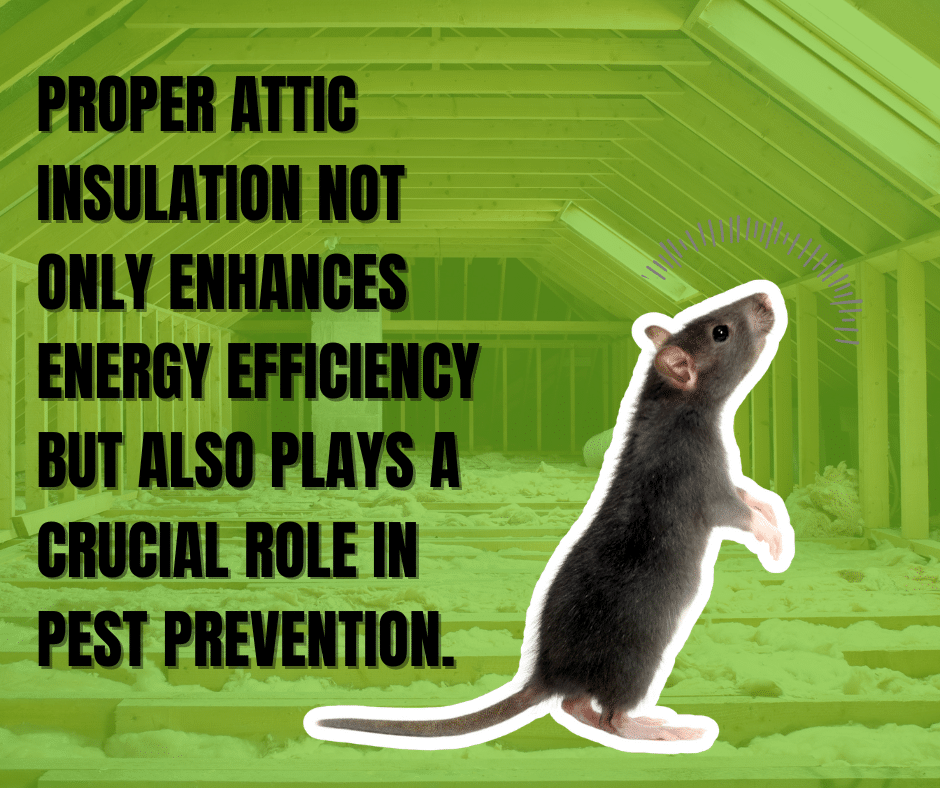
Most homeowners around McDonough, Stockbridge, and Griffin think about attic insulation as an energy issue. What they do not usually think about is how directly their insulation affects their pest situation.
The right insulation for your attic does more than help with your energy bills. It removes the conditions that make your attic attractive to rodents, insects, and wildlife. Old or damaged insulation gives pests exactly what they want: warmth, cover, soft nesting material, and easy access to the rest of your home. And once they are up there, the damage adds up fast.
Here is what South Metro Atlanta homeowners should know about attic insulation and pest prevention, and what to do about it.
Why Your Attic Attracts Pests
Pests do not end up in your attic by accident. A poorly insulated attic is warm in winter, sheltered from predators, and often goes untouched for months at a time. Here in Henry, Spalding, and Rockdale Counties, there is no real off-season for pest pressure, unlike colder states.
The part most homeowners miss is this: insufficient insulation does not just fail to stop pests. It creates the kind of environment they are drawn to.
Roughly 90% of homes in the US are under-insulated, and homes built before 1980 are especially likely to have insulation that is outdated, compacted, or damaged.
Many of those homes are right here in our service area.
Poor attic insulation also leads to heat loss in winter and heat gain in summer, which drives up energy bills and puts extra strain on your HVAC system. Fixing the insulation problem addresses both issues at once.
How Pests Get Into Your Attic
Most of the time, pest entry and heat loss happen through the same gaps and openings. Common entry points include:
| Entry Point | Description |
|---|---|
| Roofline gaps and damaged soffits | Small openings along the roofline or where fascia pulls away allow squirrels and rodents in; a quarter-sized gap is enough for a mouse. |
| Vents without screens | Missing or torn screens on gable and soffit vents let in bats, birds, squirrels, and insects, and cause unwanted air movement. |
| Gaps around pipes and wires | Small openings around plumbing, electrical, or HVAC lines provide access for rodents and insects between living spaces and the attic. |
| The crawl space below | Moisture and pests from damp crawl spaces can travel upward through wall cavities into the attic. |
Once pests get in, problems build quickly. Rodents leave scent trails that bring in more rodents. Moisture from pest activity makes existing moisture problems worse. The longer it goes unaddressed, the more the insulation itself becomes part of the problem.
How Proper Insulation Helps Keep Pests Out
Proper insulation, installed correctly, takes away the conditions that make your attic appealing to pests.
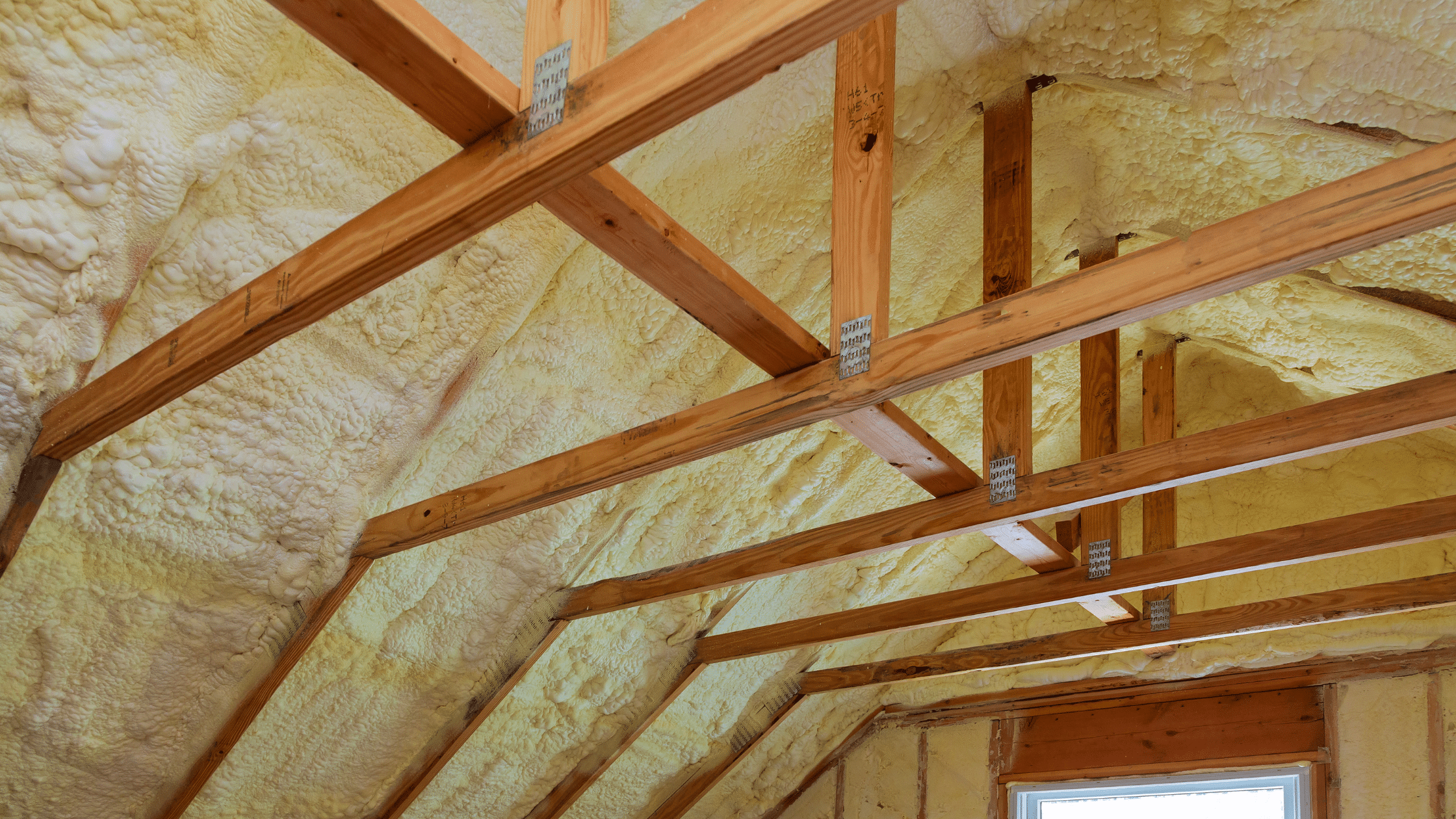
Air sealing closes entry points. Before installing insulation, it is essential to seal air leaks around pipes, wires, and ceiling joints. Spray foam insulation expands to fill small cracks and gaps that pests use to get in.
Without this step, new insulation alone will not stop determined pests. Air infiltration and pest infiltration go hand in hand.
It removes nesting material. Rodents shred soft fiberglass batts and loose-fill insulation to build nests. Spray foam and rigid foam board do not give them that option. Blown-in cellulose insulation is borate-treated, which gives it natural pest-resistance properties that untreated fiberglass does not have.
It controls moisture. Cockroaches, silverfish, and termites are driven by moisture just as much as warmth. Adequate insulation paired with a proper vapor barrier keeps humidity lower in the attic and makes it far less inviting for moisture-seeking pests. It also reduces the risk of moisture damage to your roof deck and structural framing.
It eliminates hidden pockets. When insulation covers the attic floor evenly, including around joists and through irregular spaces, there are fewer dark, undisturbed corners where pests can hide and nest without anyone noticing.
Which Insulation Types Work Best Against Pests
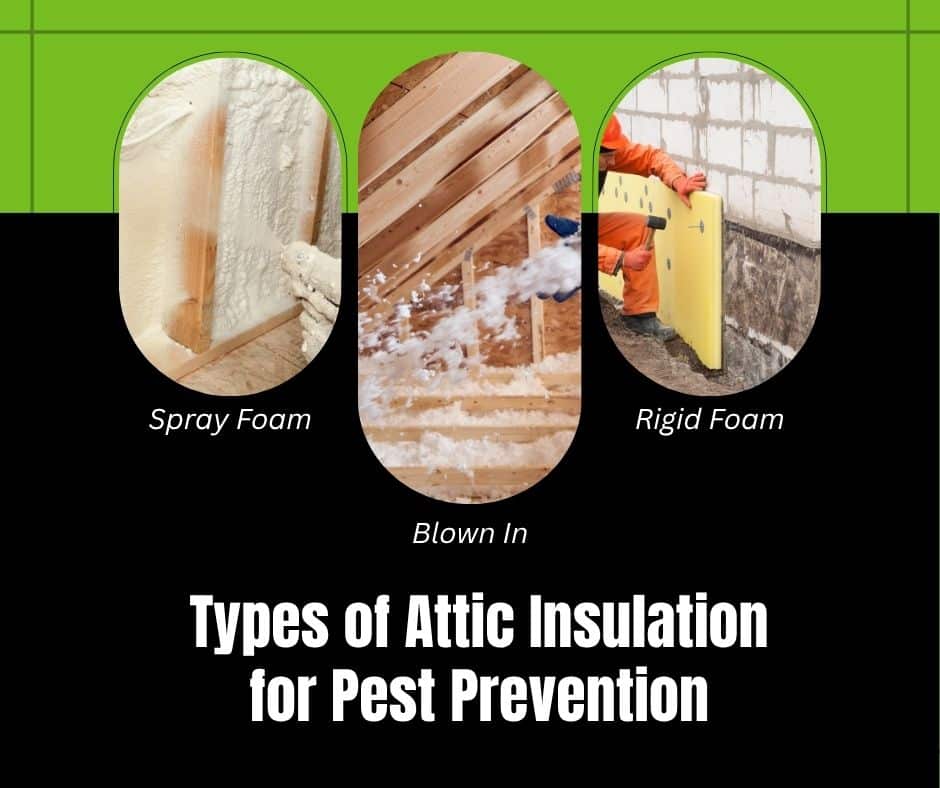
Not all insulation is equal when it comes to keeping pests out. R-value measures how well a material resists heat flow. The higher the R-value, the better it insulates. But for pest prevention, the type of material and how it is installed matter just as much.
| Type | Pest Resistance | Best For |
|---|---|---|
| Spray foam, closed cell | Excellent | Sealing gaps, roof deck, air barrier |
| Spray foam, open cell | Good | Filling irregular spaces |
| Blown-in cellulose | Good (borate-treated) | Adding insulation over existing |
| Blown-in fiberglass | Moderate | General attic floor coverage |
| Fiberglass batts | Low | Standard joist spacing, new construction |
| Rigid foam board | Good | Extra layer, exterior walls |
Closed-cell foam provides the highest R-value per inch, acts as an air barrier, and resists moisture. It requires professional installation but is often the right call for homes with significant air leaks or moisture issues.
For most existing homes in our area, the best approach is to seal gaps with spray foam first, then add blown-in insulation to bring the attic floor up to the right depth.
A quick check: if your insulation measures less than 10 to 13 inches deep across the attic floor, you likely need to add more insulation.
Common Attic Pests in the South Metro Atlanta Area
These are the pests we most often find in attics across Henry, Spalding, Rockdale, Coweta, and Newton Counties.
- Mice and rats: The most common attic invaders in our service area. They shred fiberglass batts and loose fill insulation to build nests, chew wiring, and contaminate the attic space with droppings. Scratching above the ceiling at night is usually the first sign.
- Squirrels: Persistent and destructive. Squirrels chew through small gaps to make them larger and settle in quickly, often before the homeowner knows they are there.
- Cockroaches: A damp, warm attic is a welcome environment. Roaches travel down into living areas fast, turning an attic problem into a whole-home situation.
- Termites: Drawn to moisture and to wood softened by it. Attics with old, compacted insulation and any history of water intrusion are at higher risk. Termites can use damaged insulation as cover while working toward your structural framing.
- Bats and wildlife: Bats can squeeze through small openings in soffit vents and along the roofline. Their droppings create health hazards and draw additional insects. Wildlife control combined with proper sealing and insulation work is the right approach.
Signs Your Attic Insulation May Be the Problem
These warning signs are worth paying attention to:
- Energy bills that have increased without a clear reason
- Droppings near the attic access or on the attic floor
- Shredded insulation or visible nesting material
- Chew marks on wood framing, wiring, or around openings
- A or ammonia-like smell from the attic area
- Insulation that looks flattened, wet, or discolored
- Sounds of movement above the ceiling, especially at night
More than one of these together usually means it is time for a professional assessment before anything else.
Insulation and Pest Control Work Better Together
Insulation upgrades and pest control address overlapping problems. Handling one without the other usually means the fix is only partial. Services that pair naturally with an attic insulation project include:
| Service | Description |
|---|---|
| Crawl space encapsulation | Moisture and pests that start in the crawl space do not stay there. A vapor barrier cuts off that upward pathway and makes both your insulation and your pest management more effective throughout the home. |
| Rodent inspection | If rodents are active, their entry points need to be found and sealed before new insulation goes in. Fresh insulation over an active rodent problem just gives them better nesting material. |
| Termite inspection and treatment | Attic insulation and termite risk are closely tied through moisture and wood access. A termite inspection before or alongside an insulation project gives you the full picture. |
| Pest evaluation | A professional pest evaluation documents what is happening in and around your home and catches problems while they are still manageable. |
Questions Homeowners Often Ask
Does old insulation attract pests? Yes. Old, flattened, or damp insulation provides warmth, nesting material, and cover all in one place. If yours is more than 15 to 20 years old or shows visible wear, an assessment is a smart first step. All South offers full insulation replacement and partial repair based on what the attic actually needs.
Can termites damage attic insulation? Yes. Termites travel through or alongside damaged insulation on their way to structural wood. If there are any signs of termite activity, a termite inspection should come before any insulation work begins. All South handles both termite inspections and insulation services, so you are working with one team.
What if rodents are already in my attic? The pest problem has to be resolved first. Contaminated insulation needs to come out, the attic needs to be cleaned and treated, and entry points sealed before new insulation goes in. All South’s rodent inspection and wildlife control services handle that process, so the insulation project starts clean.
Does a damp crawl space make attic pest problems worse? Often, yes. Moisture moves upward through the home, and pests follow the same path. Crawl space encapsulation lowers the overall moisture level throughout the home and makes pest control more effective from the ground up. It pairs well with an attic insulation project.
When to Call a Professional
If there are signs of active pests in your attic, insulation replacement does not come first. The infestation has to be resolved, contaminated material removed, and the space treated before new insulation goes in.
Call a professional when you have an active infestation, evidence of rodents or wildlife, visible termite activity, heavily damaged or contaminated insulation, or simply want an expert assessment before investing in upgrades.
Professional installation is especially important for spray foam and blown-in materials, which require specialized equipment to install properly.
Conclusion
The right insulation for your attic takes away the warmth, cover, and nesting conditions that pests look for. Whether you are dealing with an active problem or trying to get ahead of one, your attic insulation is either working with you or against you.
All South Pest Control serves McDonough, Fayetteville, Jonesboro, Conyers, Covington, Griffin, Hampton, Stockbridge, and surrounding communities across South Metro Atlanta. We handle pest control, rodent inspections, wildlife control, termite inspections, crawl space encapsulation, and professional insulation services, all under one roof.
Get a free quote or call All South Pest Control today.

Recent Comments